I’m really not a miser, am I? Chiming in on the Frugal vs Cheapskate vs Spendthrift debate!
I’ve seen this question asked around a lot in the financial online community: “What does it mean to be cheap?” The questions are usually some variant of “when are you frugal, versus miserly, versus profligate?” It’s been said time and again that the terms “frugal” and “thrifty” have positive connotations as admirable traits, whereas the terms “tightwad”, “miserly”, “scrooge-like”, “stingy” or “cheap” mean you’re a grumpy old sourpuss who won’t share.
So frugal and tightwad aren’t the same thing, as these examples from the blogosphere can tell you.
From I Will Teach You To Be Rich:
Cheap people care about the cost of something.
Frugal people care about the value of something.Cheap people try to get the lowest price on everything.
Frugal people try to get the lowest price on most things, but spend a lot on items they really care about.
Frugal – Going to a buffet and eating enough to get full and satisfied.
Cheap – Getting full and satisfied, then filling your pockets and bags before leavingFrugal – Satisfied with only spending a dollar on a kids meal for your child.
Cheap – Ordering an extra kids meal for your self to avoid the regular price.
But even if being frugal and being cheap don’t exactly mean the same thing, these characteristics are closely related enough that they are easy to confuse. One is the euphemistic form of the other, which you can tactfully use in defense of yourself once somebody complains of your lack of generosity. What you may possibly have not heard before was that there have been studies and scientific evidence that reveal more about how our minds influence our money mindsets. What does the research tell us?
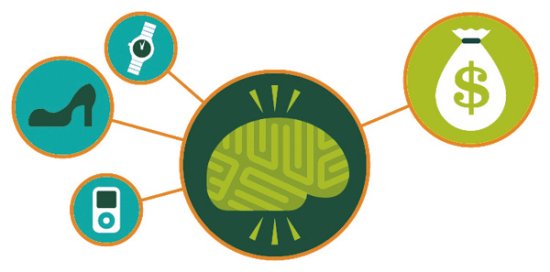
The Science and Rationale Behind Being Frugal or Cheap or Extravagant
Study #1: The Stanford University MRI Shopping Brain-Scan Experiment
Scientists and economists decided to band together to prove this point: that your brain has something to do with your money profile. Behind the tendency to save, squirrel stuff away and hoard, is the reality that your genetic makeup can have something to do with it all! Similarly, this works for the opposite side of the spectrum as well, so your urges to spend, squander or gamble your money away can also be explained by the internal workings of your mind. Does that mean you can blame your parents or ancestors for your overly conscientious behavior or on the other hand, for being so careless about your money? Maybe….. but at least now you know where all that angst comes from.
Conclusion: Your brain and genetics can be held responsible for some of your saving or spending habits.
Study #2: The Carnegie-Mellon Tightwad-Spendthrift Scale Survey
Behavioral economists also came up with a way to measure how people’s money attitudes affected their overall happiness. Before we get into the findings, let’s review the money profiles that were studied:
- Spendthrifts spend without thought and control such that they often get into money trouble. Biggest complaint: lack of money, not enough dough.
- Tightwads refuse to spend on anything, period. And will even avoid buying stuff that they actually need.
- Frugalists are value conscious and are more careful about their finances than the average person. They usually do spend, albeit in a controlled fashion or when it counts.
You’ll find more about Study #2 here.
It has been determined that the subjects of saving and consuming evoke different levels of happiness in people. This finding came out of a few studies, including one that involved a questionnaire taken by more than 2,600 subjects. Here are some details:
The Unhappy and The Miserable
Even though they love to spend, spendthrifts aren’t happy when they do. That sounds pretty ironic, but that’s because after the short-term excitement associated with the spending spree, the spendthrift’s guilt over their behavior eventually takes over and ruins their mood. So does it follow that those who refuse to spend would feel greater happiness and satisfaction over their ability to hoard money? Not in the case of scrooges. Surprisingly enough, tightwads are more miserable than spendthrifts. Since according to a Carnegie-Mellon scientist,
A spendthrift suffers after he buys something. A tightwad suffers while he buys something and then again afterwards.
Sounds like twice the pain for a tightwad. They suffer because their need to be cheap is driven not by practical sense but rather by painful emotions of not wanting to part with their money. I can just imagine how tortured such an existence could be where every purchase feels like punishment.
The Happier Than Average
Meanwhile, frugalists are considered happier than average since they derive pleasure out of saving money and putting their budgets to good use. And since they’re able to spend prudently, they don’t feel the frustration brought about by repressive budgetary constraints and self-imposed shopping boycotts.
The Happiest Of All
Now for those who don’t fall under any of these categories, you are considered “unconflicted”. To me, financially unconflicted individuals take the middle road by spending and saving with ease and without stress. These are probably the most relaxed money types out there who have successfully brought balance and sense into how they manage their finances. This would explain why they are the happiest of all money types.
Conclusion: If you want to be happy, you’ll need to relax about your money and find some middle ground between saving and spending so you’re not “conflicted”.
As we have seen here, tendencies and inclinations can vary in degree across a behavioral spectrum. A characteristic can present as a good thing, but when done to the extreme, crosses the line to neurosis. I guess that’s where the difference between frugal and cheap actually lies — frugal is still a good thing, while cheap is frugal gone bad or extreme. Oddly enough, I suppose there really is such a thing as “saving too much”.
Image Credit: Lovely picture shamelessly stolen from the New York Times
Copyright © 2007 The Digerati Life. All Rights Reserved.

{ 8 comments… read them below or add one }
A tightwad’s need to be cheap is driven not by practical sense? Sometimes it’s driven by lack of money.
Great post! I like the distinctions you made. Something tells me I won’t be “unconflicted” for quite some time, but at least in the meantime, I can be frugal 🙂
These statements: “your brain has something to do with your money profile” and “your genetic makeup can have something to do with it all!” while both probably true are NOT EQUIVALENT AT ALL. While genetics shapes the physical architecture of your brain and may predispose it to working in certain ways, your brain has the imprint of all of your life experiences. To take an obvious example, trauma to the brain can drastically alter one’s personality; damage to a certain part of the brain can even cause someone to stop being addicted to smoking. That’s a spending change that is certainly in the brain but has nothing to do with genetics. More broadly, how your parents raised you and what you ate as a kid have little to do with your genetics but have a huge impact on your brain, which will come out in a personality test or in fMRI scan.
A miser/tightwad is one who will not spend money for medical care for himeself or his family (even urgent care).
A frugal person will spend money without regret as needed for medical care having planned for that expense (urgent or routine).
A spendthrift will simply spend as much as possible in any given situation including medical.
@Minimum Wage —
“A tightwad’s need to be cheap is driven not by practical sense? Sometimes it’s driven by lack of money.”
I always thought that being a tightwad is a somewhat irrational state of mind that anyone can harbor rather than a behavior developed by someone due to their predicament. But I could be wrong… You actually bring up a good point.
@Wanda — Also very good points. You are right about brain impulses triggering one’s behavior as being a product of both genetics and environmental factors. I should qualify what I say: would it be appropriate to say that it could be partially due to genetics? After all, I have personally encountered long family lines of tightwads and spendthrifts that span many generations.
The money walks analogy is cute, Someone who is frugal will spend $1 on a kids meal, someone who is cheap will buy one for themselves too. I think the cheap one would spend $1 on a meal for the kid and eat off their kid’s plate.
Tightwad behavior can come out of trauma over things like the depression. I know a lot of older folks who, still, would rather hide a pile of cash in the floor boards. These are the people who might have a small fortune hidden somewhere but they are afraid there isn’t enough to spread around.
I think a lot of it is genetic but also influeced by observing our parents/significant care-givers and possibly their parents. I observed a lot of frugal behavior and internalized it. I have been forced to live cheap during times of financial hardship too. My brother, on the other hand, is more of a spendthrift. It’s all in how we define our constructs.
I think the best cheap/frugal descriptor would be:
frugal = what you do to save money.
cheap = the more extreme things other people do.
(partially inspired by George Carlin’s *hole/maniac drivers bit)
Nice summary, definitions and comparison. I was raised by a spendthrift (and depressed) mom and a tightwad (O.C.D) dad. I’m a frugalist and much happier than the average. My husband is unconflicted and, yes, an easygoing kind of guy. It’s interesting to observe our differences. Interesting studies, interesting post!