While growing up, I didn’t learn much about personal finance nor the concept of credit cards, which were matters I wasn’t exposed to until later in life. I learned a few basics such as bill paying, check writing, and bank accounts from my parents but for the most part, I was left to my own devices throughout college and my early adult life. So it’s a really good thing I didn’t own a credit card until I had successfully established some savings and picked up my very first books on finance: Bogle on Mutual Funds and Your Money Or Your Life, whose pages I devoured quite handily.
But I must admit that when I received my very first credit card, I was slow to use it. I’m one of those people who gets stuck by inertia and takes a while to change my typical behavior. I did not have a credit card during my college days (thank goodness) as it seemed to me that during those days, credit card companies were not frequenting campuses in the manner that they do today. I don’t recall seeing too many offers for credit floating around my university then, and I can’t speculate how I would’ve reacted if I did see any. Ultimately, this led to me getting my cards during a time that I felt financially responsible for myself as I worked on my first job. Such a start may have caused me to be more cautious and responsible about using credit, a fantastic thing!
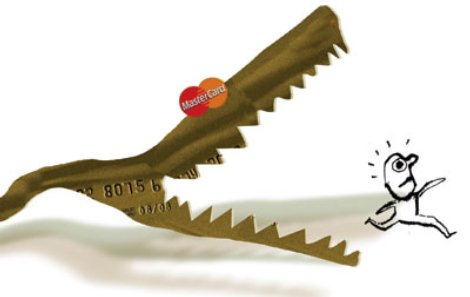
Nowadays though, anyone with a pulse can pick up a credit card very easily and begin getting themselves into quick trouble. It’s way too convenient to start using a card, which can be done with your eyes closed without the benefit of an instruction manual. I thought I’d help out a little by putting together all the pertinent warnings I’ve come across when dealing with the plastic. Protect your credit and avoid debt by knowing what it is you shouldn’t do!
How To Get In Trouble With Credit Cards
#1 Misusing balance transfers.
We put together a list of great balance transfer credit cards. But if you’re going to transfer your balance to a new credit card with a lower rate, you’ll have to check if it’s a promotional rate. It’s probably not wise to do a transfer if you’re unable to wipe out your debt before a promo rate expires and jumps up to a much higher rate. On top of that, you’re charged a transfer fee if you move your balance.
#2 Not shopping for the best rates.
The best way to use a credit card is to always pay your balance in full. If so, then the card’s rate may not be as important to you as other features would be, such as having rewards programs and long grace periods, or having no annual fees. But if you believe you’ll be carrying a balance, then by all means, find those cards with the lowest interest rates (e.g annual percentage rates or APRs). Note that one card can carry a number of APRs, so make sure you review all the card’s terms. Tip: Shop for the best rates if you’re going to carry a balance!
#3 Falling for introductory rates.
Because APRs can change on you, you’ll need to watch out for those introductory rates (also known as teaser rate, special rate, “limited time only” or promotional rates). The rates may sound sweet so that they entice you to sign up and transfer your balances over to a card but you may find that after a given period of time, those rates shoot up. Tip: Transfer your balance over if you’re planning to pay it off before the teaser rate expires and changes to a higher APR.
#4 Ignoring the terms and other fine print.
Some credit cards have you automatically signed up for certain features. If you read the fine print, this may be something you can end up opting out from and avoid getting ensnared into something you’d rather not participate in or pay for. According to a FindLaw.com survey, only 44% of customers read the terms of their credit cards, which means that some of us may not realize that rates can change on us, or that fees can be triggered when we don’t expect it. Tip: Check if you need to opt out of anything.
#5 Taking out cash advances.
It’s just not a good move to have to take out cash advances. There are high service fees and possibly higher rates associated with cash advances so it’s definitely something I don’t ever plan to use. Cash advances are costly, while saving the money for what you need is always the cheapest way to go.
#6 Not reviewing your monthly statements.
We religiously review our monthly statements to make sure there are no erroneous charges on it and to keep our eye out for fraudulent activity.
#7 Not checking your credit reports.
It is highly recommended to review your credit report at least once a year to catch any errors it may have. Mistakes in your report can lead to consequences to your credit score, higher interest rates, issues with employment or housing, or indications of fraud. Report any problems to the credit bureaus, which do receive notices of errors online.
#8 Not working with creditors when there are problems.
You’d be surprised how easy it is to work and negotiate with creditors who are looking to keep your business. If you’ve got any questions about your bill or the terms of your card, don’t hesitate to ask. I’ve had the pleasure of successfully disputing charges on my card as well as getting many fees waived just by having amiable talks with customer service.
#9 Signing up for retail credit cards.
They’re everywhere offering you an instant 10% off your day’s purchase! I’ve got family who simply cannot say “NO” to these offers and they’re now swimming in retail cards. These cards are a lousy deal because they have potentially higher rates and they just add to the clutter in your wallet. Are the one time discounts worth the hassle of dealing with more cards, open credit lines and additional debt?
#10 Paying bills without prioritizing them.
I’ve talked a lot about prioritizing our bills as a way to save on costs and protecting our interests. Pay off those bills that are the most important (those that keep the roof over your head) and most expensive (the highest interest rate debt) first. Not caring about the order of your bills can potentially jeopardize your living situation if you find that you’re having trouble covering the most essential bills by month’s end.
#11 Using credit instead of cash or debit cards.
Again, there’s no issue with using cash vs credit or debit cards if you can afford to pay off all your balances in full. But by using cash or debit cards, you’ll only be limited to spending what you have in your bank account. There’s always that danger of going beyond what you can afford when you’re tapping your credit, making it too easy to get in over your head with debt.
#12 Not paying credit card bills on time.
I can’t tell you how many times I’ve lost out on good money by having to cover late payment fees. I’ve messed up on occasion and forgotten to pay a bill or two on time. That’s actually one thing I’m seeking to improve — to be more organized and systematic about things. Not being organized just means money lost, and I’ve paid dearly for my absent-mindedness. To avoid late or missed payments, sign up for auto payments.
#13 Paying the minimum on credit cards.
You don’t have to play by the credit card company’s rules. They want you to pay only the minimum! But why should you? Pay more than you have to and you’ll beat your debt faster.
#14 Spending on credit for the rewards.
It’s been said that a third of credit card holders use their cards for the rewards (miles, points, perks, gifts, etc) but if you’re feeling too comfortable about spending on credit because you’ve convinced yourself that you’re getting the rewards for free, then this is a big mistake. Rewards are never worth the debt you can potentially bury yourself under.
#15 Being in denial about one’s spending.
It’s easy not to think you are not really spending your own money when you are using credit. A lot of card holders sweep reality under the rug and think that they can spend now and worry about paying about their purchases later. Or that “things will work out” and they’ll find the money to cover their credit card bill somehow. I’m blaming this type of thinking for much of the rampant debt problems we’re seeing everywhere.
#16 Collecting credit cards.
Credit cards can be cute. Or slick. Or really cool these days. They’ve become attractive on many fronts and many people are succumbing to the marketing forces behind these cards. There are a lot of people out there who have turned to credit card collecting as a hobby or even as a money-making venture via credit card arbitrage. Regardless of your reason for having a lot of cards, you could be facing the temptation to use them…a lot. I only keep a limited number of cards because there’s risk in carrying them; the risk of fraud, loss, error or mismanagement of this tool has kept me from owning more than a couple of cards.
#17 Putting daily expenses on credit.
If you’re responsible about paying your cards, I don’t really see an issue with paying all your expenses through credit. The trouble occurs when one is unable to control their spending because all of it just goes on credit. You know, out of sight, out of mind. Because expenses and debt can add up really quickly, it’s best not to pass off everything to the plastic.
#18 Closing credit cards improperly.
Apparently, there’s a system behind closing your credit cards. You should never close the following cards you carry:
- any card with a balance
- your only card with available credit
- your only credit card
- your oldest credit card account
- your card with the most favorable terms
In your quest to simplify our finances, you may be tempted to cancel accounts you don’t use or don’t plan on ever using. Bad move? Well this could be a mistake as far as preserving a favorable FICO score. It’s to do with your credit to debt ratio.
#19 Adding additional names to your card.
Unless you completely trust whoever it is who has their name on your card, you shouldn’t be adding anyone to your account. The moment you do, you’ve lost control of how the card may be used, which just means that you may encounter more spending on it than you bargained for.
#20 Using your credit card internationally.
If you’ve ever used your card outside of the country, then you may already know that there are extra charges and fees imposed on international transactions. If you’d rather save on this cost, then go with cash and traveler’s checks instead. Still, what I like about using a credit card abroad is that there may be less risk in doing so, since transactions on a card can still be disputed if there’s any question, while there’s the risk of cash and checks getting stolen when you’re traveling. Personally, I pay extra for the convenience of using credit during trips.
#21 Exceeding your credit limit.
Going over your credit limit can incur you some unwanted, costly over-the-limit charges and fees that can also make a dent on your credit report. So here are a few tips to avoid maxing out:
- review your statements regularly and pay in cash when you’re close to the limit
- guideline: stay within 30% to 50% of your credit limit
- if necessary, request for an increase in your credit line (though it could just be an excuse to spend even more, so be careful!)
We haven’t had much trouble with our credit cards because we do pay our balances in full each month, review our statements for possible billing errors or suspicious activity, and have had good luck with dealing with our credit card companies. They’ve displayed great customer service when we’ve disputed questionable transactions and when we’ve asked to negotiate unexpected and unwanted fees and charges (regardless of who was at fault!); they’ve been proactive with tracking and monitoring for fraud and we’ve received some wonderful rewards in the process. I’m actually a fan of credit cards but I guess you can say that the beauty of credit cards is in the eye of the beholder… or rather, in the way they are used.
Image Credit: Mother Jones
Copyright © 2008 The Digerati Life. All Rights Reserved.

{ 34 comments… read them below or add one }
Like you, I didn’t have one in college either. I’ve just applied for one now, and I’m going to do my best to keep this list and other suggestions in mind for using it right. I don’t actually need a credit card, but I do need a credit history.
I also only got my first credit card after I started working and opened a bank account. This was the way it worked in the 80s. I don’t think having it in college would’ve made me spend more: as a CS major I could count percentages. Also, I didn’t have a car in college or grad school and was too much of a nerd: no means of transportation to go to a mall and no time to do it.
About using cards internationally. Yes cards have a fee, but you also get a better exchange rate than with cash and traveller’s checks. So you need to compare. I’d always thought you come out ahead with cards, but maybe I am wrong.
For cash expenses, I usually take a debit card with me in addition to a credit card and use the debit card at the ATMs. I have a separate checking where I usually have only a small amount – enough for the trip, though. Yes, ATMs charge fee, but if you take out large amount it is not so bad as the fee is fixed. But you get interbank exchange rate – somewhere between “buy” and “sell” rates you see at exchange booths.
Another bad one would be getting another card to pay the previous – The robbing Peter to pay Paul Problem.
Also on the CC Internationally, don’t forget that most places are going to charge you to convert US into anything, especially at the airport!
More about international use of credit cards: I found this article that gives more info about it: 1) some issuers don’t charge – it is important to find them 2) exchange rates that credit cards use are better, often a lot better than when you use cash so you come out ahead even with all the fees. Here is the link:
http://www.bankrate.com/brm/news/cc/20010416a.asp
@RacerX and Kitty,
Thanks for the heads up! Interesting how credit card use could actually be cheaper than obtaining cash abroad. I’m not much of a traveler so I’ve always just stuck to credit cards. Anyone else want to share how they handle their $$ when they go overseas?
Ouch!
I’ve done 18 out of these 21 at some point, but turned that ship around a while back. Almost every one of your points reminded me of the exact time and place I made that mistake!
Thankfully, I can now look back and laugh at myself. 8)
Wow, that’s a really thorough list. All really good points — especially the one about collecting cards. I know some people who have amassed a ridiculous amount of credit cards, but have no idea the havoc it can wreck on their credit score, especially if they carry large balances on all of them.
Agreed with you on:
#9 Signing up for retail credit cards. It is normal for this category of credit cards to charge a higher interest rate. One thing to keep in mind is not to carry a balance with this card. Otherwise, the interest rate could easily offset the rewards you earned.
#3 Ignoring the terms and other fine print. This is the most common mistakes almost everyone applying a credit card is committing. We often ignore the small print only and assume it’s not important.
Credit cards are usually cheaper than travellers checks or cash for foreign use. Travellers checks involve both exchange and issue fees. Cash leaves you no backup at all if you somehow lose it. Using your credit card usually gets you a favorable exchange rate and a lower service fee.
Some retail credit cards are very good, with continuing discounts and vouchers arriving in the mail. You just need to follow the same rule: pay the balance in full.
A collection of cards can also be a scary job to cancel. Just recently I tried to check a balance and searched for days to even find a phone number, there was no number on the card and I had no success searching on-line. Creditors do not want to make canceling an easy thing to do. I think one credit card per person is sufficient.
There’s no question that discipline is the key to managing credit and debt. Creditors and card issuers are absolutely relying on our lack of discipline for late payment fees and higher interest rates. But there’s no doubt that discipline is your best defense against managing your credit cards and credit card debt. See here.
I’m about to take out a car loan to the tune of around $14,000 – which will be my first and only debt (no student loans, always pay credit cards in full). I need safe, reliable, economical transportation and I plan to hold onto the car for 10+ years, so I figure it will all work out in the end =) . I’ve actually done some interesting math concerning prepaying vs investing in regards to this specific loan. Something we should all do before getting a car loan.
I agree. I just got fouled up on the payments, too – I confused which is my automatic bank deduct and which is to be paid by check. (I use the automatic for the smaller balance card and the checks for the bigger items.) I wrote this post awhile back about freebies, affinity cards, and other do-good benefits. We just went with a Working Assets credit card for my daughter for college, since they support so many great causes.
@MoneyChangesThings,
I’m glad I’m not the only one who’s fallible when it comes to this sort of thing. For someone who’s a fairly good manager and multi-tasker, I frequently surprise myself over my organizational shortcomings. One of the things I kick myself over is how absent-minded I can get, especially because it’s normally uncharacteristic of me to be this way. It’s quite possible that age is catching up to me — you know, I blame those middle-age brain fogs that start to hit you in your late 30′s…. or when you start having kids, whichever comes first.
The easiest way to avoid late charges is to sign up for auto-payment of the minimum balance on the due date for each card you own. Everybody should do this – it takes about 10 minutes to register for the website and schedule the payment, and then you never have to worry about late charges again. Late payments are just lazy or stupid, now that you can schedule auto-pay.
Of course, you don’t want to be making only minimum balance payments. So, each month, when you would have paid your bill regularly, go to the website and check the statement and make your regular payment (hopefully, payment in full). Schedule the payment for the day *before* the payment is due (or earlier, if you like). That way, the regular payment is there, and when the minimum balance auto-payment comes due, there *is* no minimum balance due, because you’ve already made your regular payment.
The minimum balance auto-pay is only there to protect you if you happen to make a mistake.
We had a couple late payments in the last few months. We moved into a new home, had some internet problems and throw in moving “clutter”. We hope to stay on top of it now (fingers crossed).
This is a very interesting view on credit card management. I have made the same mistakes that you mentioned as well as the same wise choices. I also use a no-annual fee, cash back credit card for all my purchases. However, I have a very high interest rate and haven’t asked to have it reduced! I don’t check my credit score as often as I should and I have closed unused credit card accounts. I haven’s missed a payment and pay the balance every month. Thanks for the insights!
Many consumers are not familiar with the penalties associated with making charges on their credit card that exceed their limits and are shocked when they are hit with an over-the-limit fee. In fact most people only learn about over the limit penalties after having to pay one. This is a result of not reading the fine print of credit card agreements.
I’ve never had a credit card and never plan to, definitely the best way.
I don’t think credit cards are all that bad — it’s about proper credit management. I’m one of those who uses credit quite conservatively so my take on borrowing is fairly simplistic. Anyway, here’s something of interest — a few bloggers were profiled in this article, where they revealed where they stood on debt and credit. According to the article’s analysis of my borrowing patterns, I am what you call a “housing borrower”, which means that the only loan I have right now is a mortgage. It’s true, I haven’t borrowed much; however, I use my credit cards liberally for other reasons. Since I have rewards tied to my credit cards, I figure I’ll make it worth my while to earn something back from the money I spend anyway.
I’m also glad that I’ve learned from the credit mistakes I’ve made in the past. Following debt blogs has helped me tremendously!
Credit cards are wonderful. So long as you pay in full each month (which I do by autopay) they are all benefits and no downside.
I only use debt for real estate loans. I tried margin finance for shares when I was much younger but prefer not to deal with the volatility these days.
Re: Item 18 in the list of 21. I knew about this no-no when I started closing cards. But what do you do when 1 card goes from 10 to 18%? Another goes from 9 to 30%? Another from 18 to 31%? No one in their right mind should keep such cards open. The joke here is that the banks change the rules anytime they want. The card I had that went from 9 to 30% I had for 12 years. Never late, never over limit and actually about 70% of limit and it was dropping. According to their explanation, everyone was going to be raised to 30% regardless of FICO score. So all the old rules no longer apply because the banks changed them all in their rush to beat the new regulations. Meantime, the last card I had from Chase was closed by the bank without warning even though my payment record was excellent {ass it was with all my other cards}. When I called them on the carpet for the mistakes they made in their reasons for closing me, they just found new ones. The appeals process is just another joke perpetrated on us by the lenders.
Something that i would never do is get into debt to buy a luxury or toy so that i can impress my friends or prove to anyone that i have gone up in the world. The only debts that i would tolerate are investing debts like the margin loans, business loans and anything that i can use to increase my net worth over time — but i am also extremely wary of these too.
A business loan would probably be the only form of debt I would take on. A margin loan can be much more risky. A business loan you are investing in your self and have much more control of the situation where with a margin loan your usually in passive investments such as stocks and bonds where someone else is in control.
Cool list! It’s imperative that you check your reports regularly to make sure that there aren’t errors or to make sure that nobody’s cloned your identity. You need to know who’s made inquiries on your credit. Any kind of status check is good for your financial soul.
A great list for new and old credit card users. I’d make a lot of these mistakes when I was new to the credit card industry. I just hope someone will have the heads up not to sign on too many credit cards and keeping only the best ones with great promotions, discounts and sincere customer service.
I don’t really check on card interest rates. I base my selections on rewards and freebies. But i don’t consider it a mistake. Why? Cuz the cards I pick depend on what kind of rewards I receive for spending. I like cards with cash back and get them based on their programs because we don’t like to carry a balance.
We only use cards for convenience, say if we don’t have cash. I agree that not reviewing the interest rates is a mistake in the off chance that you carry a balance. But we never use the cards unless we can pay in full each month. So we get the chance to pick the cards with great terms.
@Stefan,
That’s pretty much how I operate as well! I guess we’re of the camp that likes to “save” with our credit cards.
On late/missed payments: auto pay is a solution. However, I secretly wonder whether by going automatic, you could end up with something worse. Could you become less careful about what charges you make since you’d take the payment process for granted? Don’t you think that with the convenience of auto pilot payments, you may be less inclined to review your statements? But maybe it’s still a greater risk to get dings on your credit score though.
Interesting point on auto payments. Reviewing card statements can save you a heap of trouble so try to do it. We’re all thinking that we are wise users of credit but really we’re not. You could be surprised by what you find when you go through a health credit check when you see your credit score! Everyone can use some improvement. Even if you have pure intentions of paying everything in full, you can still not be on top of bills as you should be.
Good points. Admittedly, I lack the level of discipline that is required to keep things much more organized! I wish I could streamline credit payments, records and reports better. It’s really more a question of organization for me! Thanks for making these points.
Admitting your mistake is the first step towards recovery. In my case, I wonder how I got into debt in the first place. Here’s my own story on how I got mired into it. My office houses stacks of paper that I am afraid to throw out because of our financial situation. In this particular instance, my pack-rat tendencies served us well. I dug out the old receipts from our credit card and discovered we racked up a balance of over $1,500 on small purchases.
Some appeared to be holiday gifts purchased in October and November. The rest of the purchases were impulse spending such as clothing, shoes and a trip to the restaurant. Did we really have to dine out and pay interest on it? Absolutely not. We certainly could have been more cost-conscious about our expenses, but we weren’t.
But I am not alone! According to MainStreet.com, America has amassed massive debt on small purchases. The president of the Association of Independent Consumer Credit Counseling Agencies, Dave Jones, told MainStreet, “Impulse buying is what contributes a lot to consumer debt. It all adds up.” Interestingly, consumers are more prepared for the big ticket items. They are conscientious about tracking those expenses and are responsible about saving and budgeting for them. Supposedly, we are able to make room for those big ticket payments. However, the smaller expenses are what seems to kill many a budget. Basically, the small ones add up, affecting payments on bigger loans and creating a “snowball effect.”
I found it quite troubling to realize that the credit card balance was due to extravagant gift giving and spur-of-the-moment spending. I’ve been working to remedy my situation ever since I realized what had happened to me.
I have literally surveyed all credit card sites and cannot find an answer to this…
If you charge something to a credit card and go home and immediately pay off this charge does it get reported to the credit bureau? Do you have to actually receive a bill with an outstanding balance and then pay off by the due date to have that transaction reported to the credit bureau?
Appreciate your time in answering my question.
@K. Sloan,
All your credit card transactions and payment behavior/patterns are eventually reported to the credit bureau. How you use your credit cards will be reflected in your credit score. In fact, any type of payment transaction or lending transaction may be subject to being reported to the credit agencies (for example, if you are a tenant who repeatedly makes late payments on rent, your landlord may report this pattern to the bureaus). Hope this helps!
It may take time for the agencies to capture changes in your payment patterns though, so your score and reports will reflect the health of your credit in aggregate (and over time).