During the 00s, it became quite the financial fad to use leverage for a whole lot of crazy reasons. There are certainly many ways to borrow money to use it for leverage. We discussed credit card arbitrage before. Aggressive traders may use stock margin accounts to increase their investment returns. But I’d like to focus on a very common leveraging technique that many people attempted during the housing bubble. People got very comfortable using their credit line as a means to get cash, but what was even more disturbing was that people began to raid their asset base, all for the sake of getting ahead. By doing so, they took on a lot of unnecessary risk. One common approach was to tap into one’s home equity in order to obtain the cash to use for other purposes. Why do people do this? Let’s explore the reasons.
Why Tap Home Equity?
Using the equity you’ve built up in your home may be an appealing option. For those seeking liquidity, getting a secured loan such as a home equity loan or line of credit may be convenient, especially if you’ve got issues with your credit (although most loans these days require good credit). A lot of folks are tempted and think that the equity is there and can be accessed and harnessed, so they think: why not put it to some use? They feel that their equity is just sitting around doing nothing and may think that it is meant for bigger and better things, say to pay down existing, expensive debt elsewhere.
Home equity is often used as a flexible, low cost way to get cash at one’s disposal. Homeowners utilize such loans for a variety of reasons:
|
The Argument For and Against Debt Leverage
Continuing on with our focus on home equity loans — I personally think it’s a bad idea to risk the roof over your head this way. Anytime you put your house up as collateral, there’s always that risk that things may not go as planned. By making this type of move, there is that chance that you can lose whatever it is you are borrowing against. The chance may be remote, but it’s there nonetheless. The same thing holds true when people borrow against their retirement funds. Since I am quite conservative with debt, this is one strategy I don’t care to pursue.
But not everyone will agree with me on this subject. There are a lot of folks who are and will be very comfortable about their prospects of taking out a home equity loan and paying that down over time. It may even make complete sense when you work out the details and see that you can get rid of your bad and costly debt so much faster by using your home’s equity as the fix. There will also be people who have more aggressive risk profiles who can leverage their property in order to buy investments. That’s fine and good — just as long as you are aware of both the good and the bad that can happen.
While this is my view of using home equity for a variety of things, I would like to introduce you to a whole different take on the matter. Mike from Green Panda Treehouse was kind enough to share with me his thoughts on dealing with student loans while juggling a home purchase at the same time. This ties into what we’ve discussed above.
Piling On The Debt: Should You Juggle Student Debt And A Mortgage?
Mike wrote the following article for us:
Many of us in our 20s are already saddled with debt by the time we start thinking about the future. Some people prefer to pay off all their student loans first before thinking about a mortgage or home ownership. I suggest an open-minded approach where you analyze your personal situation in-depth before deciding to take on a mortgage while having student loans; it may actually be to your advantage, having both at the same time. Permit me to explain.
How To Prepare For Big Loans
1. Check your overall financial situation. If you’re young and finally earning an income, the very first step is to look at your financial situation. If you are drowning in debt, you probably want to get your head out of the water before contracting the biggest debt of your life (by securing a mortgage). However, if you can afford to continue your student loan payments while putting money aside, it may be a good thing to think about buying your first home.
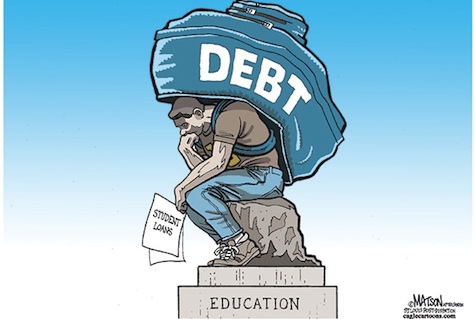
2. Review your loan interest rates and amortization. If you still have important student debts, you should take a look at their interest rates and amortization. You want to know how much you pay in interest and for how long you will be making those payments. If your student loans have special low interest rates and are not too costly, you can still pay a small monthly payment and try to buy your house sooner than later.
But you may be wondering: why take the risk of buying now while you still have student debts?
A key point will be the interest rate charged on your student debt. If it is low, there’s a good chance that your future house will increase in price faster than you can put money aside. For example, if you are looking to buy a property at $200K today and decide to wait another 5 years to pay off your debt instead, the very same house could be worth $255K if its price has increased by 5% annually. So while you paid off $20K-$30K in debt, that house may end up appreciating an additional $55K more… making it even less out of reach. Of course, this assumes that real estate valuations do recover over time, and I look at this as a valid consideration.
3. Evaluate your risks. Let’s go back to the question: can you pay off your student loans while carrying a mortgage? As mentioned, it depends on your particular circumstances, but buying a house while you have some existing debt can have its advantages. You can certainly explore the strategy of paying off your student loan faster, by getting a mortgage. This can work, but you’d have to evaluate your situation carefully and weigh the risks involved.
As a prerequisite, if you can’t put money aside right now, then forget about buying a property. But if it’s something you can manage, then taking the additional financial load (risk) may be worth it, because buying a house early in your 20s can help you pay off your student debts faster. How? By using the equity built in your property.
Suppose you have 10 years to go with your student loans and you buy your property tomorrow. There’s a good chance that the equity that you will build in the next 5 years will be enough to pay off your student loan completely. But don’t be fooled, while your student loan may be dealt with, you will still owe this money within your mortgage. However, with a mortgage, know that you can consolidate your student debts with a lower rate of interest secured by your home and this is how you can pay down your debt faster.
Finding Success As A Borrower: My Debt Management Lesson
I bought my first house at the age of 24 with minimal cash down. It’s now 5 years later and I was able to use the equity built in my property to consolidate my debts and pay them off. I now have just 1 debt (my mortgage) at a very low rate. Personal finance management and debt elimination has become much easier as I just concentrate on making the biggest payments on my only debt.
I bought my house for $255K back then. Today, my house is worth about $325K. Therefore, waiting 5 years to buy my property while paying down my debt would have been more expensive, as I had about $25K in debt 5 years ago.
So while, I can appreciate the stress related to managing debt, I still think that buying a property at a young age is a very good financial move!
About the Author, Mike @ GreenPandaTreehouse.com: “I work in the financial industry specializing in personal finance. I enjoy earning cash in different ways aside from just waiting for my pay check every two weeks. I love to try different things and will be posting true stories about my experiences. I am currently building my own online business while working 4 days a week at my day job.”
Created April 9, 2010. Updated April 3, 2012. Copyright © 2012 The Digerati Life. All Rights Reserved.

{ 29 comments… read them below or add one }
You raise some good points, but I think readers should also consider that:
(1) The return on paying down student debt is guaranteed. There is no guarantee on the return from buying a house.
(2) In your example the house appreciated, but as many have discovered over the past few years that house prices can actually drop substantially. Since most houses are bought on margin, your entire investment could be wiped out and you could easily have negative equity.
(3) The appreciation in your example (255 to 325) is basically the same as the extra interest you’d pay over the same time frame. I.e., for a 6% mortgage rate on 250k, you have to pay about 75k in interest over 5 years. To figure out if you actually lost or gained money you would also need to factor in tax deduction benefits, maintenance costs, cost of alternative housing, and the lost opportunity cost of investing in other assets.
Just some other things to consider.
I like Mike’s article and I agree that potential buyers should not wait to pay off their student loans before getting into the real estate market. You can do both and many do. But I am bullish. As Stephen points out, home ownership is not the guaranteed sure thing or solid investment that it once was thought to be. The bottom line is that buying a home should not be entered into lightly. It is probably the single largest financial investment you may make in your life. Careful thought should be put into weighing all the factors, including the security of your job, and how home ownership and costs will fit into your budget. The demise of the housing market has been so significant that it has some advising people to rent and invest the money that would have been paid on a house. If I was in my 20’s again, I would listen to Mike’s recommendation, but only after consulting many opinions and doing my own independent research, because buying a home is not a slam dunk winner, and a blog post can only begin to point out the pros and cons.
I think it is okay to have both if you can manage it financially. While I understand the points the writer makes and his situation seems to have been positive, there is a lot to consider when buy a home. When owning a home there are a lot of intangibles that can come up – such as a new water heater, new roof, new air conditioner unit, etc. The list is endless. You need to be able to handle these expenses too. If you are stretched too thin you could rack up massive debt on credit cards or worse yet, miss payments, which will hurt your credit. You do not have to worry about any of this if you rent. Just something to consider.
And who says the property market is bad? Mike made 27% in the worst economic downturn in our lifetimes! Congrats!
Best,
Sam
Property is always a good investment, especially if you look at t from a long term perspective. Whilst prices are low and the going is good I would suggest investing as early as possible in your life. There is something to be said for having a paid-off property in your early 40’s (looking at a 20 year bond)
I totally understand what you’re saying but that’s also assuming that you secure a good job first, which many college students just coming out of school are seemingly struggling with. I’d really have to agree with BasicMoneyTips because honestly, many young adults just coming out of college probably aren’t looking to invest in a home but if they really can, then good for them!
I plan on purchasing my first home and I’m 24. I have some miscellaneous debt here and there but I plan to close sometime in May. keep your fingers crossed for me.
This is actually really helpful for me. I’ve been renting ever since I graduated and now that I’m married and kids are a definite possibility in the future it getting a house is high on my list of priorities. I’ll probably end up holding out for a couple more years so I can put a bit more down and lower the mortgage and have enough saved up in the event of an unexpected emergency.
Good luck to James who is going to buy his first home and is only 24. I bought my first home in my 20s too. I will say this. It really made things tight at first. It cost me an extra $6,000 a year in carrying costs versus my apartment and there were a lot of hidden costs related to maintenance of the house and yard. And of course utilities. Factor this all in. As others have written, don’t stretch yourself too thin financially.
I also like Financial Samurai’s point about the return on the investment that Mike made on his house. If only this was true all the time! Keep your expectations reasonable to low in this housing market is my recommendation
The idea of taking one debt to pay off another makes me nervous. I understand what you are trying to say, and how this may work out for some people, but it is still a good rule of thumb to pay your debts before incurring more.
Agreeing with ConsumerMiser on the all the added costs. It is a major lifestyle change from renting to a house. You highly dependent on your job and give up flexibility and freedom. Specifically you give up geographic flexibility, so in the event you lose the job you are so reliant on, it is very hard for you to take a job in another part of the country. If you are paying down debts you are on the road to freedom, if you incur more, you give some up. Real estate is still very speculative. Your house may go up 5% annually, it may not. However, you know how much interest you are paying on your student loans and how much you will save by paying it off early.
One thing the housing downturn should have taught us is that a home is not an “equity factory” — it is a place to live. Counting on increased equity (and a HELOC or equity loan to tap into it) to fund other debts is a speculative move, and had a huge downside. Better to accelerate the student loan payments and purchase the house when you can afford it.
Student loan, just like any other loan, can be a burden if it’s not being handled properly. I’m glad to hear that you’ve made an excellent decision to buy a house at such a young age. Hope that more people will be inspired and get rid of their debts and live their life without worrying about money.
great article. interesting perspective, too….& honestly nice to see! my husband & i have a LOT of student loan debt (thanks to my medical school education…) AND we are planning on buying a cheap, fixer-upper, we-can-stand-this house during my 3 years of residency. we’ll be making *just* enough to still save, make payments on the loans, & pay for the house maintenance/monthly payments. it IS a little nerve wracking….BUT the area we are moving to offers VERY affordable homes. in fact, we haven’t found a home to rent that is cheaper than the monthly mortgage payment on those we have considered buying. even the apartments’ monthly rent parallels the cost of a smaller home in the area we are moving to…withOUT the potential equity we’d get from home ownership. we’ve got a down-payment saved, too.
so thanks for this article…everyone has different situations, obviously, but the overall cost of a home versus renting WITH student loans is certainly something to consider. i guess we’d rather be OWNERS with the potential for a little bit of return on our investment instead of just renters with a guarenteed NOTHING.
My fiance and I bought a duplex this year while he is in grad school. We have student loans but right now I only have to pay $30/month and his are all deferred (and subsidized) and by having a renter and roommate we are paying less than we were renting (even with the extra costs).
Paying off those student loans and owning a piece of real estate is not an easy task. But considering the difference between renting and owning should make it an easy decision. The tax advantages alone make it worthwhile to buy, IMO.
Great Points. When I graduated from college I was deep in credit card debt and student loan debt. I had a part-time job when I was in college but the reality was that, a part-time job alone was not enough to pay for my schooling. As time progressed, my part-time job was necessary to make my cc payments. I am not 24 and am still paying off student loan debt but purchasing a home is at the bottom of my TO DO list. Primarily because of all the college debt. I took a much different turn however. Even though I had a lot of student debt, I decided to become an entrepreneur and started my own internet business. This is now what most people would do. But I was blessed enough to find an entrepreneurial venture that would allow me to make significant income to pay down my debt. Of course, it was not easy and I had to work very hard to ensure my business success. but the reality is that I rather work hard at my business and ensure my success rater than work hard a job that will allow me to pay minimum on debt. I am still paying but have made significant dents in my student loan debt and am on a plan to pay it off completely by the end of next year. What normally takes people 20 years to do I will do in 3. Starting an internet business is the way to go!
With the current job market and prospects available for graduates, I do not envy anyone in the situation described here.
Paying off student loans is probably one of the most frustrating money problems I’ve ever dealt with, especially in this economy. You get out of school and deferments run out, now you don’t have enough money to pay them off…especially if you’ve gone the mature road and bought a house.
Well..in my opinion I think when you are still a single try to get a loan for a productive purpose or business. You can invest for a potential business or maybe build your own side business. When you have a additional earnings from it then you may get your house loan. Imagine your house loan is being paid by your side income business!
Dicky Satrio
Great Article! I have my own personal blog which helps generate some money for me whilst I pay off my Uni debt. Earning money online is the easiest way to make easy money if you know what your doing. Anyway, check out my site if you want! See whilewereyoung.com.
I can see how paying off your student loans while starting up a mortgage could possibly benefit you, but speaking as a college student who entered the working world with a pile of student loans, it’s definitely difficult to tie yourself down with a mortage on top of that! This article makes some really good points though.
In my opinion, the best way to start a business is debt free, the best way through college is debt free and if you can afford it, the best way to buy a house is in cash. That said, I have a mortgage (my only remaining debt, and only credit available [i.e. no credit cards]), and was blessed not to have to pay for my own college (though I was young and stupid and ran up a couple of credit cards, which took me a little while to clean up and cut up).
Buying a house while you’re still in any other debt and without an emergency fund is a bad idea because the cost of home ownership is much more than principal interest payments and property taxes. In the three years we’ve lived in our “ready to move in” home we’ve: refinished all the floors, had to replace the furnace, had to replace the condensing coil on the air conditioner, put in a fence, fixed porch steps, put in a fence (to prevent our now 2 year old daughter from running into the alley), had a 220 outlet swapped out, had a seal on the full bath downstairs break and had it resealed, and had the seal on the half bath upstairs break and rain into the kitchen (we’re redoing this bathroom now).
Life happens, things break and when you own the home, you’re responsible for the repair (can’t call the landlord). The house isn’t the “Money Pit,” it’s a typical house built in the 40’s and has the same problems any house of the era would be seeing right now. Sure, we didn’t have to do some of it (pulling the carpet and refinishing the floors, the fence), but the really expensive things (furnace, air condition coil) were unavoidable emergencies that will happen to every house at some point during your ownership if you own the home long enough. Could these be paid by taking out a home equity loan? I suppose, but do you really want to make interest payments on a furnace for the next X years?
Starting a business doesn’t require a loan. Granted you can’t, say, open a restaurant tomorrow on a whim, but then you’re not prepared to operate a business of the scale out of the gate either, 39 percent of business owners report it took less than $5,000, with another 25 percent not needing any startup financing at all. Want to start a business, start small (in cash) and grow slow. You’ll minimize risk and you’ll be able to survive your mistakes.
P.S. The labels on this form are not where they are supposed to be, they are over the blue background of the html or body tag, not in the white content area.
Thanks Jeremy — this made me think. It’s easy to think that the purchase price of an item is its one and only cost. It isn’t. Any item that you’ll be using over time will either be repaired or replaced. A big ticket item such as a house, a car, an appliance will all need to be repaired, replaced and maintained over its lifetime. Same thing goes for our bodies — we all need to get tune ups at the doctor every so often, right?
Nothing lasts — stuff gets broken all the time and unless you can fix things yourself, you’re going to have to spend for maintenance of the things that you are using.
The main point here is that the true cost of anything does not stop at the purchase price. Your commitment to something will almost always require that you’ll have to budget for additional maintenance of that item for as long as you need or want it.
Thanks again Jeremy, for the helpful insights!
PS. Thanks for the heads up on the layout. Will fix!
I couldn’t agree with you more about using the equity in your home to fund your lifestyle. These equity release schemes are extremely dangerous and in the UK many homeowners have lost their properties as a direct result.
I think people should do the math and figure out if the debt is worth it. For example, if I am going to take out a loan at 5% interest to invest in something with a 50% probability of paying out at 15% (I’m going to ignore time value for the moment), that’s worth it. That’s why mortgages are worth it if you assume that house prices are going to go up (big assumption these days). In other words, I’m ok with paying interest if it means making a higher rate of interest (after factoring in risk). That’s also why I’m not ok with paying interest for a depreciating asset like a TV. If you want a TV, save for it and let the interest work for you instead of against you.
I think the risk of borrowing money from the equity in the house is that you will pay for the loan over so many years. Often if it’s just for emergency cash, there are other ways to get the cash quickly. To answer the question, borrowing to get ahead will depend on each person’s circumstances, in my opinion. Some people might need the money right there and then. Also, it depends how much they need to borrow and if they cannot make sacrifices elsewhere to get the funds in the short term.
Oh well I can’t see many of us having the option of a equity release or a remortgage nowadays. Interest will soon climb to a level never seen before. The best thing would be to put your existing mortgage on interest only and start reducing your outgoings.
It’s interesting to read the examples from 2010, where a house bought in 2005 was worth more than the purchase price. That same price has probably dropped down to or below its 2005 price by now.
That said, one interesting aspect here is that if the house does appreciate, and you do manage to refinance to turn your student loan debt into mortgage debt, you can be quite better off. Mortgage debt is tax deductible, typically fixed rate, and can be discharged in bankruptcy. Student loan debt is typically none of those, and can be one of the most dangerous kinds of debt to be saddled with. (Which is not to say you should avoid student loans at all cost; just that you should be careful about taking them on and diligent about paying them off.)
The problem with mortgages in the UK is that most products you have to remortgage in 3 – 5 years. This has been great for people when property prices have risen and interest rates have stayed low but now with the banking crisis looming there is a very strong chance that these rates are going to rocket. This is why the Government has recently announced their new loan scheme as without it rates would be going through the roof. The danger with this though is that people are going to be signing up to record low rates and when they come to remortgage these rates could be sky high and put them in financial ruin. Mortgages should be fixed for the whole term in order to stop this crisis which is around the corner.