Would you buy a house with a scary past? Not one that is deemed “historical” based on its lovely architectural features that peg a home to a particular time period, but rather one that has some kind of story behind it, which may not be all too pleasant.
Since I’m a huge crime buff, I thought I’d delve into some interesting points about buying a house with a back story (also known as “stigmatized property”).
Imagine finding out a house is for sale for 20% below the comps in surrounding areas: you’d think it’s a steal but in reality, there’s a reason for that lower price. Something sinister just happened in that house, perhaps some kind of unsavory crime, or catastrophe that has a psychological effect on people. Would you buy it? I personally don’t think I can stomach a house that is tainted in some fashion because I tend to be slightly superstitious about the vibes found in a house, so I’d pass. In effect, this is exactly what we did when we once faced this type of situation.
When we were shopping for a home in late 2001, we came across a well-framed, spacious house we thought that could work out for us, but as soon as we stepped foot in the foyer, I felt a chill up my spine. I couldn’t explain it except perhaps that the house seemed “dark” and “cold”. I clearly felt it (and so did one other friend who accompanied us in the tour), and it was later on that I was told that one of the owners had just passed away in his hospital bed. Well whatever it is, I sensed something! And despite the 10% price cut they gave us relative to other homes we were considering, we skipped on it.
Definitely no regrets! But here’s the epilogue:
Other house hunters saw the situation through a different lens and decided to buy that very house. They then proceeded to give the residence a cosmetic facelift and ended up selling it for 36% more than the original list price that was offered to us, after just a mere 3 years. Surely the hot market had something to do with it, but also the significantly improved ambiance, as the house looked like a totally different place after minor improvements were made.
Check out these Before and After photos of that house we almost bought. See how mood, appearance and atmosphere are changed significantly with simple paint jobs and a big yard clearing!
Before Improvements |
After Improvements |
|
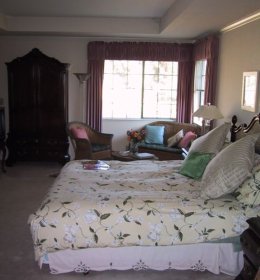
This is the bedroom when we first saw it. Notice how dark it is!
|

This is the bedroom after a “redo”. The home sold for a 36% profit in 3 years’ time.
|
|

Thick vegetation filled the yard.
|

A bright and airy yard all of a sudden!
|
|
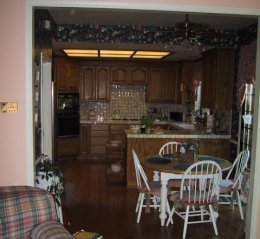
This kitchen is way too dark and feels “old”.
|

A bright, amazing transformation with a refacing! No longer spooky.
|
So the moral of this tale is that there is opportunity in “stigmatized” properties, or real estate tainted by anything from scandal to crime, catastrophe or rumors of the supernatural. Stigma can mean anything to anyone though, and for some sensitive people like myself, even the recent natural passing of a previous owner may be enough to scare me away from buying a house. Faced with such a situation, how would you deal with such a property? Some thoughts on the subject:
How To Deal With “Stigmatized” Property
#1 Check disclosure laws of properties with questionable histories.
I’ve always assumed that the seller is liable for disclosing issues about a house. But from some of my readings it appears that not all states have this legal requirement. Find out the laws covering disclosure responsibilities and how far reaching they are. Also determine how these regulations play into laws that protect the privacy of the home sellers.
#2 There are realtors who specialize in this type of properties.
Believe it or not, there are real estate agents who deal with hard-to-sell properties day in and day out. If you’re in a bind, they’re the ones you want on your side.
#3 Don’t bring back the memories.
Tainted homes overcome their stigma at some point, but the black mark can return if something brings their story back in the limelight. Take for instance the house where the Jon Benet Ramsey murder took place. After 10 years, the house was finally overcoming its taint, until some guy named John Mark Karr confessed to the crime. Something like this will unfortunately impact a home’s value just as if the crime happened all over again.
#4 Stigmatized homes sell for less, but typically fetch 3% less than comps and around 45% longer to unload. But those with the most traumatizing events surrounding them can cut as much as 15% to 25% from its “regular” price.
#5 If you’re selling such a house, be patient.
Somebody looking for opportunity will eventually find your house and unfortunately, you may have to accept lower offers for it. If priced “right” (perhaps at a reasonable discount), the house should still move. Here’s an example of a house of horrors that sold at the right price: it was listed at $335,000 and sold at $261,000 for a 22% discount.
#6 Crime scene or other stigma lasts at least 2 years but can remain for as long as 5 to 7 years. Beyond that, our short memories forget all about what happened.
#7 Owners of stigmatized homes can market their home in one of two ways: play the stigma up or keep the story low key. If the stigma is played up, that’s because some people believe that they can sell a house due to its notoriety.
#8 Tainted homes are perfect as fixer uppers because a good rehab can completely change the psychological effect of such properties. If you change the look enough, you’ll feel like you’re in a whole different environment.
#9 Know the facts about a house before jumping to conclusions.
If you’re a home buyer, check out the facts of any story behind a home, especially one that has circulated in the media or has become sensationalized. Do some investigation and find out the accuracy of the information surrounding a stigma.
#10 The effect of stigma is supposedly difficult to measure, as compared to material or physical defects such as a cracked foundation, flooded basement or asbestos in the ceilings. Dealing with such a house can be tricky but can prove to be profitable if you get past the heeby jeebies and do a great job of “cleaning out” its past, say via a home improvement project, remodeling the home or asking a priest to come over and bless the house. Anyway, that’s what I would do.
Despite all that talk, I’ll tell you what I think is really scary. What can be more disconcerting than a house with “stigma”? Well how about living in a neighborhood where all the homes are in foreclosure, selling at auction and falling rapidly in price? I’d find that much more troubling.
Copyright © 2007 The Digerati Life. All Rights Reserved.

{ 23 comments… read them below or add one }
We bought a house that seemed to be haunted. We purchased it as a rental unit about 12 years ago. Every single tenant that ever lived in it talked about a female ghost. And the interesting part is we never mentioned it to the prospective tenants. The last people to live in it before we sold it this past spring was my oldest son and a couple of his friends. They felt her presence too and for some reason named her Thelma. She didn’t scare them too bad unless they were in the basement, then she got to them. I actually believe I heard her too. When we were prepping the place to sell, I was in the basement and heard distinct footsteps on the floor above me. But, nobody was in the house but me! SPOOKY!! We even ended up doing quite well on our selling price for the property. Interesting post, thanks!
I definitely don’t want to buy a spooky house because of all the movie and horror story behind it. If I am ever a seller of such a haunted house I will definitely lay out all the truth behind or else it will bother my conscience.
I don’t think I could buy a house where there had been a murder. I don’t necessarily believe in ghosts or the supernatural like that, it would just be spooky knowing a murderer was once in the house. I’m very easily frightened and presently live alone, so I’m highly sensitive to things like that.
If something bad happened in the house (murder mass suicide), and you have kids, forget about it. You can put it out of your mind, but the kids friends will never let them forget it. Children can be mean, and being the new kid is bad enough. Being the new kid from the house where x horrible thing happened… Yikes.
The last house that I lived in had something weird about it. We would always hear sounds when no one else was home and doors would constantly open and close on their own. It was really creepy. I never heard of any stories behind the house or anything but we always joked about how it was haunted.
Great post.
Yeah, I have a rule that if I am buying a house for me to live in personally, then if not new it can’t be built more then 10 years ago.
Buying a house with a bad past is a big no-no for me. I get scared fast. I don’t want to be in a grudge movie situation 🙂
I’ll always buy new.
When we were house-hunting several years ago, I looked at no less than 50 houses. There’s one that still gives me the creeps when I think about it. It was big and had a nice location and I could have easily fallen in love with it but as soon as we walked inside there was a strong “bad vibe” in the house. My kids and the agent and I kept talking about how weird the house felt. The feeling kept getting stronger as we walked around through the living room, family room, and kitchen. Then we looked at the bedrooms. All of the bedrooms, except for the master, had those sliding-bolt locks high up on the outside of each door. That was it; I told my agent there was no way we were interested! We high-tailed it out of there and never looked back. I do sometimes wonder what happened to that house and who would have had to guts to buy it. It was definitely a house you’d buy for a family.
Elizabeth,
Your experience seems to have mirrored the one I had! It would have been very interesting if you had tried to get more information about the previous owners or current sellers. If you’re a highly sensitive person, you may be able to pick up on these things more, but it’s strange when a group of people collectively feel a “vibe” despite not having a predisposition towards the sixth sense.
I’m not going to lie… I get shivers just reading some of these comments
Worst comes to Worst you can always ask a priest (or the little boy from the Sixth Sense) to spend a night in the property!
Seriously, I would tend to believe that children are able to feel energy better than us. If my kids would be ok to live in this house, I might consider buying it.
Can’t say I’ve ever been in this situation. My building (I live in New York) was built in 1916, though, so the odds that someone died in this apartment one way or another are pretty high. In fact, one of my neighbors made reference to this happening at one point. It must have been a peaceful death that followed a good life, because I’ve never found my home to be anything other than tranquil and relaxing.
Deaths and other creepy events that may have happened in a house can definitely scare quite a few people. But what if the house has a history for being in a horror movie? I mean, it has to be harder to sell them, just because movies reach such a wide audience. Like, do you think it would be easy to sell the house where “The Exorcist” was filmed? I came across this article and it made me wonder =)
http://trends.move.com/haunted-by-hollywood/
One of my biggest fears about buying a house is that it turns out to be haunted because you’re only going to find out it’s haunted after you’ve bought it, as the seller sure as hell isn’t going to warn you about it.
Great post, and timely for Halloween! I actually follow this issue pretty closely and have a zillion relevant articles on haunted real estate at a page dedicated to that topic (www.HauntedRealEstate.com)and now also a blog along those lines too (www.HauntedRealEstateBLOG.com).
Some states REQUIRE the seller to disclose if a place seems to be haunted or not. California and Hawaii are in that list. Others do not (Oregon is in that list). For most states, it’s a “don’t ask, don’t tell” situation. So I would advise your readers that if buying to ASK about the home’s history and if selling to check the laws of the state where the home is. Agents often do not know what the law requires, and the forms don’t always fulfill the law’s requirements. For example, in CA there is no line on any of our disclosure forms asking “is your home haunted?” but the requirement does exist to disclose if it is. The forms are only a “help” and do not constitute the entire burden of disclosing. But more about that on my site 🙂
Great post, fun to read and very timely!
I probably wouldn’t buy a house where whatever murder or other crazy event happened if the event happend less than a decade ago, because other residents in the city will remember that too, and when it comes to selling your house, you’ll be in the same place as the people before you. If th event happened 25-30+ years ago, most people who were around will be gone, and it won’t be as big of a deal.
The improvements certainly helped, although I liked the backyard overgrown (but that’s just me). I think the biggest thing was the kitchen. It was much to dark before.
Do you have to legally disclose a haunting?
Improvements can only help soo much. It may seem a worm better feel but at the end of the day if the house has a “stigma” so to speak that doesn’t go away. You said it your self you felt something in your stomach when you walked through the door. a cosmetic make over won’t help that go away. You listened to your gut instinked and made a wise choice for what ever reason. So to say a make over will make it better is not true. More people need to listen to what is being said to them within.
It appears to me that most of the “after” pictures were taken with “professional” lighting whereas the “before” pix were not. Obviously, the “after’s look better.
J Blum,
I actually took the “Before” pictures. I’ve been in THAT HOUSE. I know how it felt like. It was a nice house and had a great foundation but it was DARK. It felt creepy. I considered buying it because it had a good price but I couldn’t do it because I had a weird feeling about it.
I can’t say the same for the “After” pix, but I can see how nice and bright the colors are after the makeover. The kitchen is SO MUCH brighter. I’m really not a huge fan of dark wood.
But we may all have different tastes and some folks may like dark looking houses. But I’m particularly sensitive to the mood, ambiance and feel of a house…not to mention other-world entities…. 😉 .
I still find it interesting how some people want to live in a haunted house. I surely wouldn’t. Thanks for your submission to the first Ghost Stories Carnival!
I lived next to a house some time ago, and there was a double homicide that took place there. Long after the ordeal was over, the bank came in and took over selling the property. It took them 3 years and a huge percentage under value to sell the house. I know that the people who bought it were from out of town, but there is still a weird feeling towards the people who bought the home from neighbors in that neighborhood. I know that I wouldn’t buy a creepy house.
Once a house haunted, there will no people will come and buy the house.