In these difficult times it’s not uncommon for someone to work at a second job or juggle multiple jobs to make ends meet. These days, even those of us with just one job to deal with work twice as hard in our current positions to avoid the fatal pink slip. Unless you have an emotional suit of armor, you may very well end up burning out. The consequences may be extremely serious for yourself and for your performance. So it’s important to be aware of some warning symptoms that you must heed in order to avoid permanent damage.
Is Stress At Work Affecting You?
Are you feeling exhausted without good reason?
According to the famed Mayo Clinic: Burnout is a state of physical, emotional and mental exhaustion caused by long-term exposure to demanding work situations. Burnout is the cumulative result of stress. So the first thing you want to watch out for is the beginning of exhaustion in one or all three areas.
As a teacher, I have witnessed burnout in veteran colleagues who act like “zombies” in class. They simply repeat the words and go through the motions of teaching without any enthusiasm. To the students, they seem apathetic, listless, and tired. Needless to say their effectiveness as instructors is close to zero. Anybody who says that we have too many days off has no idea of the immense stress that 10 hour days exert on our psyche.
Keep Your Eyes Open For the Warning Signs!
There are some warning signs that you are headed for a burnout. Here’s a short list:
- You no longer enjoy your work and its challenges.
- You are losing your sense of humor and occasionally snap at your co-workers and colleagues.
- Frequent headaches.
- You have trouble sleeping.
- You are irritable most of the time, including at home.
- You drink more than usual.
- You pick up a smoking habit or smoke more than usual.
- You no longer have the patience to listen to colleagues and/or family members.
- On your days off, you don’t know what to do to relax.
- You make some serious mistakes because you can no longer concentrate.
- Your self-esteem is at its lowest point.
- You gain weight.
How To Manage Job Burnout and Get Your Energy Back!
As soon as you notice any or several of these symptoms, you must act immediately to avoid further consequences, such as losing your job, losing friends, and even losing your spouse. You also don’t want the scary prospect of experiencing a nervous breakdown. But to take action requires a high degree of introspection, a term psychologists use to describe the ability to analyze yourself.
The best way to relieve the stress is to find and restore the balance in your life. I therefore offer the following suggestions to handle and hopefully relieve this very common mental and emotional disturbance (some of these ideas can also help you keep fit):
1. Exercise!
If you were not doing any physical exercise, now is a good time to start. The best thing you can do is walk (or run at a steady pace) alone in pleasant surroundings, such as woods, lakes, hills, mountains, or simply flat terrain in the desert. Pick a place with very few people where you can empty your mind and enjoy nature. For more ideas, here are some ways to exercise without spending a fortune.
2. Stop and breathe deeply.
We have forgotten the marvelous art of breathing. Fill your lungs (hopefully with clean air) and hold it for 15 to 30 seconds before exhaling. Do this 3 or 4 times — no more or you’ll become dizzy — until you can feel that your heart rate has slowed down. I’ve discovered that learning additional relaxation techniques such as visualization or yoga can make quite a difference.
3. Spend an evening with favorite friends.
Make it a quiet evening with very little alcohol, stimulating conversation and mutual support.
4. Change jobs.
If you find yourself working at a company that’s not so supportive of your troubles, would you leave your job in the midst of this recession? It’s something to consider if your workplace is taking a heavy toll on your health, and you’re unable to make the necessary adjustments at work to resolve this problem. You may worry that it’s not financially feasible to quit your job, but this temporary situation won’t compare to how tough it will get if your health fails.
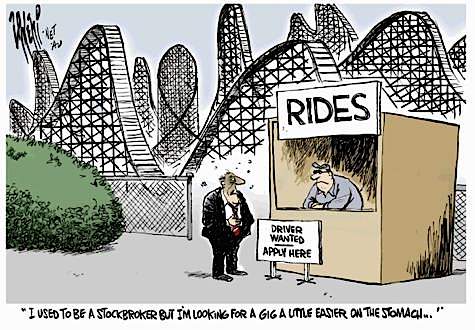
If you notice that you’re stuck in a rut and no longer enjoy what you are doing, it may be time to look for something more rewarding. I once met a man who gave up a high paying job on Wall Street to open his own restaurant in a tourist area. Changing your daily activities and setting new goals will often be sufficient to restore your “joie-de-vivre.”
5. Learn to say “no”. Take some of the load off.
Many of us want to have it all, but balancing work, business, home, family, community and the other demands of life can become overwhelming when we aren’t able to say “no” to all our obligations and responsibilities. Some of us live under the expectations of being a supermom or superdad, but the long term effects of dealing with this pressure can be harmful. So watch what you put on your plate! Learn to prioritize, monitor what you’ve got going on in your life, and trim away the things you can afford to do so, in order to maintain a realistic load.
6. Think twice before going on medication.
It’s common for those who are suffering stress-related symptoms to turn to their doctors for help. The medical community has a default response and solution for this condition: very often, you’ll be prescribed medication to control your stress and anxiety.
But can this just be a bandaid for problems whose root causes should be addressed? There are many success stories that have demonstrated that you can lift your mood and get your “old self back” without the need for medication, if the source of the stress is directly addressed. If you can help it, try more natural methods to handle your anxieties first before resorting to anything more drastic. But you know yourself best — seek medical attention and advice when you have to.
7. Get enough sleep.
The body restores itself when we sleep. Too many of us are sleep-deprived, but haven’t you noticed that when you get the sufficient amount of sleep your body needs (preferably 8 hours) on a regular basis, your energies are restored? Keeping this up can do wonders for our embattled systems.
8. Eat well.
Maintaining a good (ok — reasonable) diet is essential to keeping your body and mind ready to address the demands of modern, everyday living. If you’re especially stressed, there can be a higher toll on your body, adding to its wear and tear much faster. For your system to replenish what is lost, a balanced diet (with limits on fats, sugar, processed and junk food) helps tremendously.
9. Have great sex.
The key here is not how much you get but how much you give. Do everything possible to satisfy your partner (don’t turn around at the end and go to sleep. That’s offensive as it shows that you don’t care much about him or her). Take your time, don’t rush.
10. Read the Great Masters.
If you read them already in the past, do it again. Read the wisdom of Buddha (Siddharta), the humanistic visions of Carl Rogers, Augustine and his religious musings, the good humor of Christopher Marlowe, the extraordinary perspicacity of Shakespeare, or any of your favorite mysteries.
Remember, you only have one shot at life; a day without joy is a wasted day. I’ve also tried this mental exercise: I’ve look at all the beauty around me and think about how lucky I am to be alive. By thinking this way, our troubles seem puny in comparison.
Copyright © 2009 The Digerati Life. All Rights Reserved.

{ 28 comments… read them below or add one }
Great list of tips. Sometimes it is indeed difficult to put things in perspective these days.
Items #4 and #5 can be a challenge now that we are in economic crisis. It becomes more difficult to say no, or leave a job, if you have no other options. I guess that drives more people into stress these days, as an article puts it — sub-health (the area between health and illness).
Nevertheless, the list you provided has adequate guidelines on how to overcome stress at work and continue to be productive, in and out of office.
Great thoughts…
I’m definitely a big believer that life is too short to do something you hate. If you’re in a tough spot right now with your job, you have to ask yourself a simple question: is this just a rough patch or is this the way it is?
No one is going to love their job 100% of the time, but if you find yourself not enjoy at least 80% of your work, you should find something else.
Elmer, how important is our health compared to money? I agree it may be difficult, but at least consider the possibility, as Grant states, that life is too short to spend it doing something you hate.
I can really relate to this post right now. I have been burnt out at work for a couple of months and it is really taking a toll on me and my family.
My boss just authorized me to get a gym membership and expense it provided I go at least 3 days a week. I have been keeping up my end and it does help but I think I have a back log of stress to burn off.
Reading great books especially humor is a great break for me. I have been buying more Wodehouses than ever during this recession. Plus it helps boost the economy also.
Jacques, this really post hits a chord with me. I counted about 9 of those warnings signs that applied to me. Here’s how I handled it: I worked to get another job within my company. Even though I wan’t happy, I knew that the project would eventually die down and I could move on (I did this trying to keep good relations with the management).
I still have trouble sleeping and keeping focused at times, but the new job is an improvement.
I love this post! I’ve been feeling burnt out a lot lately myself, and it comes down to taking on too much. I’ve talked to the appropriate people and made adjustments where I can, so I’m hoping I can get back into my groove with a renewed sense of energy. This list of advice was fantastic, but I have a couple of things to add, if I may.
1.) Take your vacation. We all need a break. I know sometimes we try and make it through, showing how dedicated we are to the company, but in reality, everyone needs a break at some point. Even if you don’t go anywhere or plan anything, taking a few days off to veg can help relax you mentally.
2.) Along with saying “no,” learn to address what it is you want. Sometimes employers load stuff up on us because they think we like the challenge. We do so well with everything they’ve given us and they want to keep challenging us, so they pass on more work. Sometimes it’s a simple matter of saying that while you like challenge, you had something else in mind and you don’t want the extra work as a form of challenge. It’s just a matter of being upfront. Of course, that’s not to say you should walk in and refuse to do any extra work, but if they’re piling it on because they think they’re challenging you, then say something.
3.) If finances permit (or if you have a significant other) invest in massage! This is so good for stress management. I’ve started including just a quick 30 minute massage in my budget once a month and I’ve noticed such an improvement in my stress level. The little place I go to charges me $45 for 30 minutes. That’s worth it to me, particularly when they work out the knots that build up.
Thanks for sharing this post!
Nice article, all the tips were great!
I think stress prevents you from really enjoying life, I wrote about stress and how to enjoy life recently: http://www.scordo.com/blog/2008/11/how-stress-is-preventing-you-f.html
Good luck to all the stressed out people!
Vince
Mike, thank for sharing. You may want to do what Kristy recommends, a good massage can work wonders. Another idea that popped in my mind is to look for significant pro bono community work. Helping others can contribute enormously to take your mind off you own problems and place them in proper perspective.
I couldn’t agree more with tip #1 that exercise is key to a healthy work-life balance. But we can take that one step further and incorporate movement at work to avoid physical and mental burnout. Steelcase research supports the idea that workers should sit, stand and walk throughout the day while working.
Movement helps the body share the load between the muscles and ligaments, helps with blood flow to the body and brain, and keeps you comfortable, productive and alert—not to mention burning calories.
Sitting in the static “perfect” upright posture all day is not healthy for the body. Consider buying a dynamic chair that promotes movement and multiple postures (including reclining). Consider an adjustable height table that lets you stand for part of your day. A new product now available also gives you the option to walk for part of your day while doing email, and other simple computer tasks.
Our research shows that if you can sit, stand and walk for part of your day while working, it reduces stress and makes you more comfortable and productive.
Ken Tameling
Seating General Manager, Steelcase
for me working out is key – the tough part is being able to take a break during work hours to go do it. Now that I have left corporate life I work out and take an “ADD Break” from 11-2 and my life is much better now – I wish I had done it years ago instead of always having lunch meetings.
Ugh. This is just a painful reminder I have to go to work in the morning. 🙂
Take a stress test to find out how you can cope with stress at work and elsewhere in your life. Get help managing your stress by knowing exactly what it is that’s causing it.
Nice tips to tolerate a bad job environment, but the really impossible thing is when you have to deal with an aggressive atmosphere. In my former profession, I have seen sick people many times where their only choice was to resign and look for a new position.
Everything makes sense with some good tips and warning signs. But unfortunately like so many other articles and programmes written about stress none of the suggested solutions will provide anything but short term relief.
In order to gain any lasting relief from stress the ROOT causes must be tackled.
Everybody perceived stress differently and experiences it in their own unique way but there are two factors common to all situations where you are required to perform successfully.
1. Certain demands are made on you
2. You apply certain resources to meet these demands
Stress is cause by a lack of balance in the way that you perceive the demands being made on you and the way that you perceive your abilities to cope with them. In other words you suffer stress because you FEEL that you can’t cope with what you BELIEVE is being asked of you and no amount of exercise, medication, proper food or sex will make any difference in the long term.
@MikeW,
You are so right. I suffered many terrible symptoms of an unknown illness for 2.5 years. My body was thrown off balance due to complicated pregnancies and after that, I had experienced fibromyalgia, arthritis, pains, low grade fevers, migraines, you name it. I was diagnosed with Hashimoto’s thyroiditis but with medication, things got worse. I even thought I had a more serious disease that I was not aware of, but no specialist could figure it out. I spent a TON of money just trying to figure out what was wrong. I met with a whole slew of doctors and specialists who would say one thing vs another. Nothing was working through “traditional medicine”.
Then it was later on that I met with a functional doctor who tried out more “natural” approaches to healing. She told me that I may have adrenal fatigue. So first thing I did was to quit my job. I wanted to change my lifestyle to see if it would make a difference.
Long story short, IT DID. A year and a half after I quit my job, I am completely BACK to normal. I am my old self. I now earn a living as an online entrepreneur. I was amazed how things can change when you are more in control of your life — I have more flexibility with my schedule so I am less stressed even if I work more. I eat much better, sleep whenever I need to and it all makes a difference.
Good points all in this post. I would add listening to music as stress relief too as it can actually trigger a rush of endorphins which make you feel good and is good for stress relief management in your life.
Watch out about quitting your job though, in the current environment unless you have a good plan to get back into the workforce it can take some time making even more stress. However sometimes being unemployed is less stressful than some jobs!
The list above describes everything I am feeling at the moment. My current boss is a bully and speaks to all staff as though they are dirt on his shoe — even his wife who is a co-director. Unfortunately, we have no HR or union person as it is a family business and I have spoken about how I feel on a few occasions and just get the response “his bark is worse than his bite”. I have been to the doctors for anti-depressants and also seen a hypnotherapist to see if I can ease the problem myself as i have gotten to the the point I will feel like this in every aspect of my life as the situation has made me feel that low and worthless. I have lost my confidence. I am now looking for another job and hope that I find something in a happier, healthier environment. Wish me luck. Thanks – Diane x
@ Silicon Valley Blogger
Hi, I’m really curious about that traditional medicine which you were given by a woman for Hashimoto’s thyroiditis, because I have been suffering the same symptoms like you’ve been for the last 2 years. And I can’t find out the reason. Could you send me e-mail for that. I will really appreciate it.
@yengul,
I am sorry to hear about your troubles. I can’t really provide you with that information as I am not a medical professional and would be hesitant to give you direct information like that through this forum. But you may want to do some research on the web about what is helpful. You may want to visit a “functional doctor” to help you through this. There are many forms of thyroid medication which you may want to look into. Some are synthetic hormones and there are others derived from the pig’s thryoid. Many patients prefer the latter because of its natural constitution.
In general, I have improved my symptoms through better diet, exercise and proper nutrients. I eat salads daily and avoid eating red meat as much as possible. I also take my vitamins daily. Vitamin D and C are supposed to be good for the immune system.
Stress can lead to common mental health problems. Investing in helping employees to manage stress makes economic sense. Why not ask your employer how they can help?
Thanks for the great article. I find that I get burn out easily, but I work in retail so I guess that’s to be expected. Dealing with bad customers regularly is not a great recipe for a good job! If it wasn’t for the great people I work with, I’d have left long ago.
Thank you for this article.
I’ve done some writing on the issue of stress in the workplace. As one friend of mine put it, “Stress is almost always about conversations that need to be held, but aren’t.”
Tom Patterson – Executive Coach – Seattle, WA
Really helps!
I was a part of a team where i was given overload, i used to work for more than 14 hours a day to finish something. I did not have the courage to quit the job, due to financial commitments. Finally in December i had my boss changed – I took this opportunity to change my work profile and put my papers to quit(though i did not quit – but i did search a new one in case nothing went right) I clearly explained the new boss about the issues that i had working with a heavy load.
I certainly made a change ever since then… i suppose what happens in overload situations is that we hide emotions in our mind assuming that the other person would realize or appreciate your efforts in some way. But when you do not see any appreciation you become dull day after day and work kills you with low esteem. You would certainly not like your job. Hence here’s what i think should help others to change their burnout situations… Just stay proactive, what you need to remember is that you have the power to choose. if you remove it from the below sequence you will simply have helplessness.. hence time to realize what you need and desire.
Your Situation ————> POWER TO CHOOSE ———-> outcome/results.
please do not take pills or alcohol it does not help in fact further ruins your following working day.
Do feel free to write to me – nishit_497@yahoo.com
Rgds,
Nishit Kumar
Bangalore, India.
I couldn’t agree more, however why wait till you get to burnout. There should be a way to handle stress in the moment that it occurs. There are techniques that can be practiced without anyone knowing and there is a way to change the spin of the occurrence so that the situation is less stressful.
Well…I once went to a hypnotherapist to help me with my insomnia and she pointed out to me a very valuable fact: babies NEVER get insomnia. Translation being that insomnia (and stress) is all in our heads. I try to keep this in mind when I am up at 3am…
Awesome tips. Using our “power to choose”, we can actually turn our stressful moments into beneficial situations wherein we can experience personal development and job satisfaction.