You want to keep fit and stay healthy, but are you making smart moves to lower your health care costs?
I had something going on for a while — some chronic health issues that bugged me. I’ve seen the round of specialists and no cigar. They couldn’t help me. I looked to relieve strange health symptoms I’d been experiencing that have stumped the regular medical community I’ve consulted with. The symptoms were strange only in the sense that they aren’t standard symptoms that point to any one classic malady, so nobody, in the span of two years, could really provide me with a reasonable diagnosis that I could go home and worry over.
So I turned to homeopathic treatment to try to get myself more “balanced” and hopefully get my old self back. And here’s the good news: homeopathic and alternative treatments have worked, and together with lifestyle changes, have banished my discomforts. It turns out that “stress” must’ve triggered the problems I’ve been having and I’m in much better shape now.
But the point of this story was for me to discuss the financial implications of going to an alternative doctor. I’m not sure what most people think, but my experience with traditional medicine hasn’t been all too satisfactory. From dealing with painful insurance issues, to frustrating visits with a revolving door of specialists, to terribly high out of pocket costs, this experience has been both a time and money pit for me.
As it is, the costs of medical care are ridiculous (especially in the United States), so the fact that it’s the leading cost of bankruptcy is not a huge surprise to me. Health problems are a double whammy as they suck to live with, and also suck your finances dry.
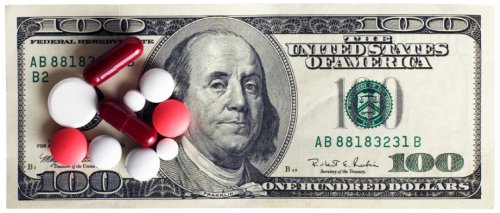
What’s even more unfortunate is that many people who try alternative treatments are already at the end of their rope. Despite that, these treatments aren’t covered by insurance because of their “alternative” or “natural” designation — not approved as “real” medical solutions. But by golly if I wasn’t going to find a way to make these easier on my pocket!
Enter… Uncle Sam’s tax breaks.
The Tax Deductibility Of Health Care Costs
Since I itemize my tax deductions, I at first rejoiced when I heard from my homeopath that some of my out of pocket expenses on supplements, tests and prescribed treatments would be tax deductible. She insisted on it, though I didn’t really believe it; I’ve argued this out with my tax guy in the past. So I consulted with the tax expert yet again about this and other aspects of the tax code that relates to health care costs. Here’s a Q & A covering some health care tax issues I have at the moment (I’m not a tax expert, so please refer to your CPA, Enrolled Agent or tax software for actual advice):
Q: Can I deduct my prescriptions, medications or supplements?
A: If you’ve got a diagnosed condition and your pills or other medications are prescribed, your medications and even supplements are tax deductible under certain conditions (you need to reach a certain limit for the costs). But over-the-counter won’t count.
Q: What health care costs are really tax deductible?
A: All your medical costs including out of pocket costs, co-pays, prescriptions that add up to more than 7.5% of your annual income for the given tax year can be considered for tax deductibility. The costs are deductible above that 7.5% point.
For example, say your AGI is $80,000 and you have $10,000 of health costs. Your Schedule A itemized deduction is limited to $4,000 ($10,000 minus $6,000, which is 7.5% of your $80,000 AGI).
Q: Now that I’m self-employed, how can I have my business pay for my health insurance?
A: I’m a sole proprietor and I found out I could get a tax break from having my business pay for my family’s health insurance by using a “healthcare reimbursement arrangement (also known as a IRC Section 105(b) plan)”. There are some tricky points to this rule, but it’s something I’m exploring right now. It could mean big tax savings!
Sole proprietors, partners in partnerships, and S corporation shareholder-employees can’t participate in HRAs. But there’s a loophole in the law: A sole proprietor’s spouse can be covered. And that coverage can include both the employee and the employee’s family. Even though the spouse-employee’s family includes the sole proprietor!
Let’s say that your family pays $9,000 a year for health insurance and another $9,000 for uncovered medical expenses. Say a family member has an expensive long-term illness. Or simply that you’ve got teenagers with big orthodontia bills.
Because you’re self-employed, you would get to use the $9,000 of health insurance costs as a business income tax deduction in most cases anyway. (Self-employed individuals can write off medical insurance if their business is profitable.) However, with an HRA, you’ll also be able to use the $9,000 of health insurance costs as a self-employment tax deduction. That saves you roughly $1350 annually.
In addition, you’ll be able to fully deduct the other $9,000 of uncovered healthcare costs as both an income tax deduction and as a self-employment tax deduction. This deductibility could easily save you another $1350 in self-employment taxes and then another $2250 in income taxes. Total savings: $4950 annually.
For more details on this topic, check this helpful article. But as I’ve mentioned before, better to consult with the tax experts about your specific situation.
Other Ways To Lower Your Health Care Bills
It turns out that despite all the tax breaks that exist out there that try to “ease the pain” for those of us with big health bills and medical expenses, these palliatives are just not good enough. So what CAN we do about this? Other than make enough noise and join the health care debate raging on in our country, I can only come up with some tips (which I’ve also covered at the Prosper blog) that can hopefully help stave off the misfortune of dealing with ill health and painful health care costs:
#1 Maintain your health.
#2 Have enough savings for emergencies.
#3 Be prepared and have insurance coverage.
#4 Have a Plan B. Address your worst case scenarios.
Unfortunately, even performing health-restoring changes may not be entirely free, as witnessed by the fact that I quit my job to alleviate the stress I had been experiencing, which was duly identified as the major cause of my “hard-to-diagnose” afflictions. I lost out on the money, but I’ve hopefully gained more of my health, sanity and overall happiness back.
In the end, I had a choice to make — pay less for medication (with requisite side effects!) covered by insurance to mask my symptoms, OR pay more — a lot more (as I’ve mentioned, the holistic approach is most likely NOT covered by insurance) — for “functional treatment” that would attempt to find the root cause of problems, aiming to address these problems directly. In some respects, this adds to some of the issues we have with health care in this country.
Don’t get me wrong: I think traditional medicine is the way to go when you need surgery, are facing a life-threatening condition or have a clearly diagnosable problem. But health care is not just about making symptoms go away, it’s also about preventing disease and maintaining well-being. Now I’m not so sure that’s the traditional medical community’s forte, or even something in their financial interest, for that matter.
Something I’m not looking forward to: as we grow older, we’ll be having more and more experiences like this that remind us that health is one of those things that no amount of money may be able to restore once it’s gone. So always take care of yourselves! Be healthy and prosper.
Image Credit: Piper Report
Copyright © 2008 The Digerati Life. All Rights Reserved.

{ 20 comments… read them below or add one }
Some scientific information about homeopathy: http://www.quackwatch.com/01QuackeryRelatedTopics/homeo.html
…before you say “it worked for me, so it must work!”, look up: http://en.wikipedia.org/wiki/Placebo
Glad that your lifestyle changes made a difference! The sugar pills didn’t.
I think traditional medicine is the way to go in a lot of cases but I’ve heard from friends that swear it’s not. A couple of my friends visit a doctor of some sort? that practices non-traditional methods and swear that they feel 100% better all the time without medicines etc. I think there is a need for both.
I didn’t know health care was the leading cause of bankruptcy – thanks for the stat and the information about tax breaks for the self-employed!
I’m quite excited that I finally got approved for health insurance. I hope I won’t have to use it for anything. My goal is to stay healthy as much as possible. 🙂
Before anyone tries homeopathy or natural treatments, yes, please do your research first! I agree with Tim about these things. I’m not saying they should work for everyone, am just letting people know about my personal experience. I went through 2 years of trying to figure out my issues with many, many specialists…. but hey, non-medicinal treatments and changes worked for me. If that’s all that was needed, then why doesn’t the medical establishment tell us that? Instead they push medications when you may not need it.
At the same time, the opposite may happen — you needing medical treatment and not seeking it through the proper channels. By refraining from seeing your doctor when you really need it, you could be doing damage to yourself. So yes, seek treatment but KNOW your situation and condition well. The medical community is not infallible.
Everyone’s situation is different. It so happens that what happened to me was something that I could only resolve through my own research and my own lifestyle changes.
As with money, health issues are not cookie cutter and are specific to each person. Even the same condition can manifest differently in various people.
I attended a talk on the Chinese art of Chi Qong, given by a non Chinese medical doctor, Dr. Farid. This guy is very passionate about this art and bemoans the reluctance of the medical profession to give due recognition.
Dr. Farid showed some videos of a Hong Kong clinic where they used Chi Qong to greatly slow down the advance of cancer in patients declared hopeless by the medical profession.
I was really impressed. Taking up Chi Qong is on my goal list for the year, but I must admit, I have not done anything about it so far.
What kind of stress symptoms are you having if you don’t mind me asking? From the way you talk in this article…sounds like you probably have the same thing I do. 🙂
@Fathersez,
It seems that the Western world is too quick to judge the healing “powers” of Eastern medicine. I am basically a “scientist” at heart so I put into question many things that don’t have a clear scientific basis. However due to necessity, I have done some research and found that a lot of the principles of non-traditional medicine (or a hybrid of Western/Eastern medical thought) can be scientifically explained.
If only yoga or acupuncture, etc can be medically insured eh?
@Amber,
Ah, I had autoimmunity symptoms that were triggered by stress. Many times, people with “imbalances” in their system can resolve them just with lifestyle changes — more exercise, better nutrition, balanced life, and yeah, less stress! I thought I would be stuck with my issues for life and was prescribed stuff to counter its effects. But after a while, I decided to stop the medication and tackle my complaints with other changes. I NO LONGER have these symptoms. I am practically my old self (after only a few months of implementing the changes).
One of the steps I took to balance things out was to quit my job, stop living a Type A++ life (okay that’s still a struggle NOT to do 😉 ), and improve my time management. Anxiety, stress and so forth can cause many debilitating symptoms that may seem like a true disease, when in fact, a lot may be to do with how you could be dealing with your environment. Not all problems can be attributed to your body, they may be rooted in your environment. With some conditions, if you change the environment, you may actually, miraculously get better!
Health care system is more like a business rather than a system that is supposed to help people. Why not fight those business minded people who capitalize on other people’s bad health?
This was a really interesting post for me. I have a chronic digestive condition that makes me pretty miserable most of the time, and Western medicine has for the most part failed me, minus some prescription medicines that merely mask symptoms for a few days, and leave me feeling worse after they’ve worn off. After suffering for five years, I finally went to a naturopath who said she could help homeopathically. We had a consult, and between her hourly rate and all the supplements, the bill was almost $500. That’s after I declined several other supplements she offered. I’m a recent college grads so my parents had to help me. She put me on a yeast-free sugar-free wheat-free diet for a month and I felt much better, though the symptoms came back when I stopped, and I can’t realistically stay away from that stuff all the time. I called her in misery half-way through asking what the next steps were, and she told me I would be doing coffee enemas. We didn’t schedule the next appointment at that time and I knew that wasn’t something I wanted to do, so I never called back, and surprisingly, she’s never called me to follow up. Anyway, long story short — I wish I had known I could claim all of that as tax deductible, and I’m glad to know that someone else has been in this dilemma before! It’s very frustrating.
This is a fantastic article. We had encountered a similar experience in life. When all routes of traditional medicine and treatment had failed to cure a lingering RSI (repetitive stress injury), alternative medicine worked. Yoga, meditation and a balanced living with a healthy diet and less stress has put us has back on the route to healthy bodies. Homeopathy rocks, provided you’re working with a good doctor.
Thanks SVB for this great post.
Cheers,
FIRE Finance
Great post. Traditional medicine is for treating illness. Homeopathic treatments and stress reduction is for increasing wellness. People worry about the harmful side effects of plastics, chemicals and cell phone radiation and don’t worry about the effects of stress, lack of sleep and a lousy diet. Lowering your stress, eating healthy and getting sleep will take you a long way toward good health. What I have done to dramatically lower my stress is walking outdoors, watching less news and no violence on TV, keeping to a schedule and I stopped multi-tasking!
My husband has Reflex Sympathetic Dystrophy known as RSD. There are only a few real specialists on RSD in the entire US. Unfortunately, non of them are in Miami where we are, or we never met one here. Over 20+ years of suffering, with totally inadequate medical care, plus injuries inflicted by doctors who didn’t know what they are doing, my husband it totally disabled and ready for hospice care.
Luckily for him and me, my husband is a psychologist with a great stamina and great sense of humor… But all in all, our search for medical help for him is a sad, sad story.
Someone should do a study on how many people actually committed suicide simply because our healthcare system failed to alleviate their pain.
Going through this sad experience with my husband’s care, I am scared into remaining healthy for as long as I can. I don’t eat junk food, I force myself to excise, I try to relax and avoid any physical traumas as much as I can. (RSD is a condition that starts with an inocent physical thrauma.)
If you are young and healthy, don’t take it for granted. You should be aware that serious illness can happen to anyone at anytime. It is hard to navigate our healthcare system and look for help when you need it. Most things you need to do to remain healthy require no money and lots of motivation. I hope, my story motivated you, if just a notch.
No doubt that alternative medical systems like homeopathy have gained popularity during last decade due to some drawbacks of western medicine.Cost and side effects of treatments are the main drawbaks of western medicine which are not found in herbal based medicines.
Most of people around the world — especially from third world — rely mainly on alternative medicine because it’s cheaper than the chemical ones. The main reason behind this is the traditions and costs.
Gotta say id just stick with traditional medicine myself.
Aren’t those darn Osteopathic doctors considered physicians and not Alternative medicine doctors? As a matter of fact back in the 1960’s in california, if you were an osteopath, you could buy your MD for 65$ and trade it in like a used Buick Regal. Natural medicine and nutrition is blowing up right now so there are plenty jobs out there. The American Medical Association is threatened because its competition and thats more and more money they are going to be losing out of their pocket. And to think that medical doctors really care about your health and well being? When was the last time you went to the MD and he spent more than 2 minutes with you educating you about health instead of looking at you like an inferior monkey and ripping out a prescription and sending you on your way like an assembly line. The pharmaceutical companies own the MD butts like a pimp to his H – e!
There is some good information here. I was not aware of these tax breaks. Thanks!
That is a very interesting article. I never knew you could deduct medical stuff from taxes. Thank you for the information.
Informative post. I found it particularly interesting to hear that prescription meds can be tax deductable. Why didn’t my accountant tell me that?
Great articles, I started taking Homeopathic, because I didn’t like the side effects of Traditional Medicine. I found it to be cheaper lest side effects, and works just as well I still have stress, but I’m dealing with it better now than on traditional medicine.