Lose weight and look good and you may just earn more money.
Vanity and the search for physical perfection cuts across genders. In the past, I’d written about the business of beauty and the economics of cosmetics, where I talked a great deal about how much work women do to make themselves look more attractive. I wondered how much was too much. How much money would you spend to make yourself look good?
With only a teeny tiny bit of makeup and a simple blow dry, I can transform myself from looking scary to decent. So I don’t really spend very much on cosmetics or on primping. I’ve abandoned that vain self of mine long ago, thank goodness. By going simple, it’s really saved me a ton of money through the years.
Yet you can’t argue with our general desire to try to look as good as possible. This is something I’d encourage everyone to do, as we all owe ourselves the chance to appear decent and acceptable; reaching our potential in that regard is a good thing. But I do disagree with the overall message that society places upon us, that looks are really all important. I disagree because I see so many people really go overboard on this matter, and in my case, it hits close to home when I witness (from folks I know) the needless spending of dollars on outfits that never see the light of day (and remain tagged in closets), the stash of branded bags that only get used once in a blue moon or the collection of shoes that could put Imelda Marcos to shame. Oh and the bags need to match those shoes exactly.
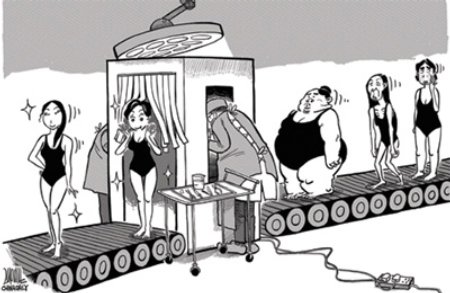
How Money, Success and Physical Attractiveness Are Linked
It’s another story though, if you work in the image business and need to look fine and fashionable. Beauty sells and brings in the bucks, so it’s natural for people in certain fields to want to better themselves in this way, and to make the appropriate investment. As I’ve said in some earlier posts on this subject, I’m glad I’m not in such a field, so I don’t have to conform to this “nonsense”. In fact, having spent my career in a male-dominated field has caused me to do quite the opposite and to downplay the attractiveness factor, since beauty — in the world of engineering — is a mere distraction, while left brain talent is what’s revered.
But as many studies do attest, it’s a “beautiful world” so to speak. Here are some interesting facts about how money and physical attractiveness correlate. The following information and images used in this post come from these sources: China Daily, The Regional Economist, The Independent and Career Builder.
- Beautiful women have a better chance of getting jobs and tend to marry higher-earning men.
- Good-looking, slim, tall people tend to earn 5 percent more an hour than their less comely colleagues. After variables like education and experience are factored out, researchers said the “beauty premium” exists across all occupations, and that jobs requiring more interpersonal contact have higher percentages of above-average-looking employees. Researchers also discovered a “plainness penalty”, punishing below-average-looks with earnings of 9 percent less an hour. So a person with below-average looks tended to earn 9 percent less per hour, and an above-average person tended to earn 5 percent more per hour than an average-looking person. Ouch!
- The difference can amount to as much as 15% of salary between the best and worst looking. Economists James Andreoni and Ragan Petrie wrote, “We find a beauty premium even though beautiful people contribute, on average, no more or less than others. Attractive people make more money than middle attractive people, who in turn make more money than unattractive people.”
- People are more likely to buy items from physically attractive salespersons. When asked to describe people based simply on a photograph, study participants classified attractive people as sexually warm, responsive, sensitive, kind, interesting and strong.
- There’s an assumption that beautiful people are more cooperative and helpful. Attractive people make more money because they found it easier to generate co-operation among their co-workers. But when beautiful people aren’t pulling their weight, their looks count against them and it is the unattractive who come out winners.
- When someone is attractive, we assign many other positive attributes to him or her that have nothing to do with looks.
- Occupations that require more interpersonal contact have higher percentages of above-average- looking employees but the plainness penalty and the beauty premium exist across all occupations.
- From an economic perspective, higher productivity justifies higher income. So the relevant question is whether good looks lead to higher productivity. This is why looks are so important in TV news. A good-looking anchor attracts more viewers. And a bigger audience enables a TV station to charge higher rates. That is a productivity boost created by good looks, so a higher salary is fair.
- There’s a higher beauty premium among private sector lawyers than their government-supported counterparts since private attorneys need to attract and keep clients.
- The average CEO is approximately 3 inches taller than the average American man, who stands 5-foot-9. Further, 30 percent of the CEOs are at least 6-foot-2; the corresponding percentage for American adult men overall is only 3.9 percent.
- A study by the Industrial Society found employers tend to put beauty before brains when hiring staff. Many companies are now more interested in a recruit’s looks, speech, dress sense and personal hygiene than in how well they did at school or university.
Well that can explain why job discrimination is alive and well, at least in certain businesses! More fascinating information on wage discrimination due to appearance:
The wage differential discovered for obesity seems to be limited to white women, the study said, belying an unmeasured productivity explanation. Economists also found that women considered obese in terms of their body mass index (BMI) in both 1981 and 1988 earned 17 percent less than women within their recommended BMI range. And while weight seemed to dog women, short men get the short end of the stick. Economists found a “height premium” among white men, with a 1.8-percent increase in wages for every additional inch of height over the national median.
Ugh! I’ve heard about the power of the media and how it shapes the self-esteem and body image of our young people, but this unsettling reality stretches beyond the influence of fashion magazines or even vapid teen television shows and the like.
Investing In Your Looks: A Hardcore Example
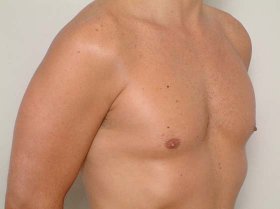
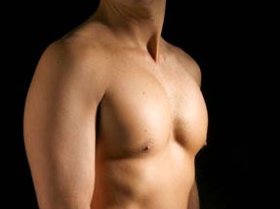
Despite understanding these so-called rules of society, I was still stunned to find that people are prepared to pay up and invest so much into their appearance, to a point which I find utterly appalling. There’s just something deeply creepy uncomfortable about thinking that there are guys out there who care to pump up their chests or emphasize their derrieres with synthetic material. I cringe at the thought of women doing this very thing, but to spend ridiculous amounts of money for this is just beyond me. With this being cosmetic or elective surgery, it’s all out-of-pocket.
Before |
After |
|
|
Pec implant surgery starts at about $7,000. Beverly Hills surgeon Adrien Aiache, who performs about three dozen procedures per year, says he charges $9,000. The massage therapist, who asked not to be identified because he is sensitive about appearing overly vain, says he paid $12,000 and has no regrets. “No one’s ever said, not once, ‘Are those implants?’ ” he claims – including the men with whom he’s been intimate.
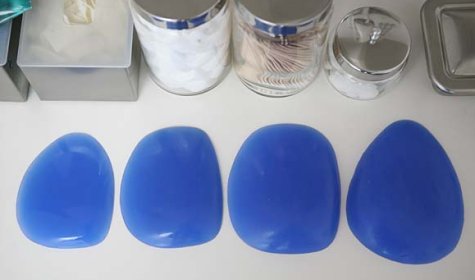
But even if plastic surgery is not covered by insurance, it could very well be considered a business expense, perhaps in some industries.
Simple Steps To Look Better and Enhance Your Outer Beauty
Instead of going for these radical beauty solutions, you can focus on simpler tips to elevate your looks, as suggested by marketing and brand guru, Catherine Kaputa. Reach success with these basic steps to improve your looks:
- Package yourself: clothes will not help you perform but will help how your performance is perceived.
- Emphasize features: be confident about your looks and build a strong image. Focus on the strong points of your appearance. I assume this means that if you’ve got a good body but an average face, the way you present your body should be optimized. 😉
- Have a trademark: think Bono’s shades or Sir Robin Day’s bow ties. Stand out from the crowd. Ummm… I’m not quite sure about this tip; a suggestion like this can backfire if you do it wrong.
- Focus on “soft power”: use your values, style and point of view to attract others to you. Stand tall, and never slouch. I agree that posture adds to one’s confident appearance, and looking confident adds to attractiveness.
- Hone your speech: the ability to sell yourself and your ideas is critical. Being articulate adds to your attractiveness factor, well I guess because it helps you come across as “smart”. It’s a charisma booster, that’s for sure!
Competition makes us all do crazy things I guess — just think of all the people (many celebrities) who were already pretty to begin with, who have decided that they needed to continue hiking their beauty quotient and who have needlessly gone under the knife. Beauty begets money begets beauty — it’s all a vicious cycle, thanks to our image-conscious society, and right now, it’s something I’m not buying into.
Then again, I’m not yet 50. Ask me again what my opinion is when I get to that point.
Copyright © 2008 The Digerati Life. All Rights Reserved.

{ 24 comments… read them below or add one }
It’s a shame, but I believe it. But it reminds me of that Helena Rubinstein quote, “There are no ugly women, only lazy ones.” I wouldn’t quite go that far, but it is a reminder that there is a lot of room for improvements and maybe that is good news for some.
I think too much focus is put on plastic surgery, though (in general, not just here). There are so many other ways to enhance one’s look. One of the best is free — a smile. Though, now that I think back to years of braces, maybe that isn’t so free after all.
Hahahaha @ the pec implants. But really its not difficult to start weight lifting, which is the absolute best way to improve your body. Yes, even women. There is no such thing as getting “too” bulky, weight lifting will burn more fat than anything else, period.
I agree! Just exercising, eating right and sleeping well will get you a long way. But in our “want it right now” and instant gratification society, this kind of advice is too old-fashioned, unfortunately.
Plus, sometimes it’s not enough to be okay and healthy — people are striving to be stunning and gorgeous to the point that they’d rather change their god-given appearance. 😉 Hey it worked for Pamela Sue Anderson and so many more out there in the “entertainment” industry.
There’s also a big market for this for older people who just want to keep looking young. After all, you can’t reverse age…only slow it down!
@Jesse, thanks for the reminder! I should really get back into lifting weights. I used to, in college, and it really slimmed me down.
Just to start—smile! I’ve seen it make a world of difference.
I think one of my friends is one of the most beautiful women in the world. It sometimes surprises me that other think her average. But then I’ve seen her smile and laugh and after that you just can’t think her anything but gorgeous.
haha..this reminded me of an incident at church this sunday. This lady was wearing these cute shoes and another girl said, ” hey those are cute.” And she said, “yeah but they’re really uncomfortable.” Then the other girl turned to my hubby and said, “see what women go through to look good?” Then my hubby pointed me and said “PPPPSSSHHH” I really don’t make an effort to dress up and brush my hair. That’s why I am The Baglady.
Dear Baglady,
Oh my, I think we’re going to get along VERY WELL! LOL! 😀 I look forward to a Silicon Valley blogger meetup where we can compare notes 😉 . I have the SAME EXACT opinion on women’s shoes…. What would you rather have, deformed feet stuck in tight, pointy stilettos or beautiful feet in flats? I’ll take the latter, thank you very much!
That’s why having an internet business suits me just fine. I don’t have to worry about how anyone looks or how I look.
It comes down to creating a kick ass information product, doing what it takes to get traffic to it and building a list of satisfied customers.
Creating products using the InfoProdCreation.com course and providing quality content is my 3 piece suit:-)
Fisk Gawsen
@Meg and Mrs. Micah,
Smiling is great. I am big on smiling. But you’d certainly be at a disadvantage if you smiled but your teeth were crooked or yellow.
I am actually shocked over what my pediatric dentist is now saying — that my kids (6 and 3 yo) will need to have braces. Shouldn’t have been a surprise, since everyone is being urged to get braces nowadays! The reason (or excuse) I hear is that there are too many teeth for the size of the jaw. Too many teeth = crowded teeth, ergo more cavities. Sigh.
For coffee drinkers especially, using some teeth bleaching over-the-counter products should help too. When you whiten your teeth, you can smile more confidently!
I fully agree with your “creepy” feeling regarding men who want pec implants. How crazy! How ridiculous! How foolish!
So why is it so acceptable that a female would do that? It’s just as creepy, in my book, even if we have gotten used to the idea as a society.
This is a great run down on the phenomenon of better looking people earning more money. It is something we are told our whole careers, but rarely is it summed up as nicely as this in one complete article.
I would never go for the pec implants! Then again, I’m against any kind of plastic surgery for non-medical/reconstructive needs.
I’m going to have to agree with the other Meg — definitely a bit creepy. I’m not totally against plastic surgery, but it does give me the heebie-jeebies. I had a breast reduction, mostly to alleviate chronic back pain, but I had to make sure while flipping channels to not come across one of those surgery shows because I really didn’t want to think about the process.
Meg, thats a little different. If something is causing you problems in your daily life, then by all means thats something you most definitely SHOULD take care of.
Try teeth whitening. It does wonders for your appearance.
One of the biggest thing that can make a difference in how you are viewed are your shoes. So many professionals today are opting to wear flats which are usually unflattering. A pair of cheap high heel shoes makes a much better impression than the most expensive flats on the market.
Nice caricature, lol.
Hey, I’d also like to have such a great machine!!! Please tell me the price – I’ll pay it!!! :o)
This should be based on ability, not looks!
Seriously unsettling stuff, when you really think about it. I know where I work I’ve been flat-out told that they are more likely to hire you if you’re attractive, because I work in retail. So weird.
I realized beauty is money and that is why I went for braces in my 40s. A better appearance will make me more money dealing with the public. On the flip side, I saved 35% on the cost of adult braces in L.A. It’s both about making $$ and saving $$!
-Katty
It’s both shocking and totally expected that looks have such a strong bearing on the opportunities one encounters in life. I am not surprised, but I’d never seen any statistics to back up my hunch!
Investing in our beauty is a good investment, after all, we are doing it for ourselves. If you have the opportunity to do it, just do it! If you can’t, then focus on your interior beauty, because that’s where the real beauty comes from…
Your self confidence depends a lot on your physical appearance. So it is all the more important to fish out some tips to have your body and skin well toned.
It is true that the more self confidence you feel the better you do in business and life for that matter. And when you look great you act great….usually. It all starts with how you perceive yourself and ultimately how you feel. We all know about the 8 pound chihuahua with the 80 pound attitude. It all comes from the inside first and then manifests its way out. Plastic surgery after plastic surgery won’t ultimately help you create a positive, unstoppable self confident attitude. The real you has to do that.
And if you have aspergers, your non-verbal communication is always going to label you as off putting. (look up tvtropes, uncanny valley) This is the result of mass human rationalization, the discarding of logic and objectivity (a focus on people’s actions) for a slew of false virtues, not limited to and including mistaking political patronage for the masses as generosity, when it really is a clever campaign strategy by an often attractive human. I have learned the tendency for humans to discriminate without realizing they are doing it myself, often the hard way throughout my life.