This piece shares some simple ways to save money and the environment. This is part of Blog Action Day, an online event that unites together our thoughts on the environment.
Sometimes, I wonder what our world would be like without us in it — a provocative thought experiment that I’ve conjured more out of curiosity than anything else. Without the human race and our impact on the atmosphere and our environment, would nature rejoice? A lot has been covered on this topic, including this interesting interactive graphic that illustrates a timeline for the world once it is left to its own devices.
Environmental pollution is prevalent in many places (I’ve lived in a few) and a lot of it is due to a lack of awareness or concern for these issues. But there are steps we can take to become more aware and to help conserve the world’s resources. Some ideas may be tougher to achieve, but there are small adjustments we can definitely make to help the environment rejoice even with us walking the Earth. Even at this time, I know there are certain changes that may not be entirely practical to commit to, but I also see some simpler things that can be achieved with no trouble at all.
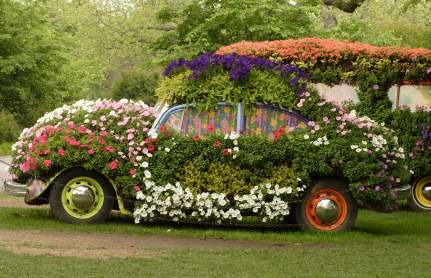
Here are my own tips that I’ve written about or found around the blogosphere that I hope can be helpful towards conserving our budget, as well as towards preserving the environment.
Simple Ways To Save Money and The Environment
Here are some methods to go green while keeping more of the green in your pocket!
#1 Stop receiving junk mail
Junk mail is such a nuisance. I spend a couple of hours each week just to sort through them and shred them afterward. I’ve been swimming in them since time immemorial thinking I couldn’t do anything about it. But actually we all can fix this problem by following these Smart Money tips. The easiest change is just to get your name delisted from a number of junk mail sources. To get you going, think of these statistics:
The average American receives 11 pieces of unsolicited junk mail each week, according to the Center for a New American Dream, a nonprofit dedicated to promoting responsible consumerism. Tallied up, that bulk accounts for 100 million trees lost each year. By reducing the amount of junk mail you receive each year, you personally will save two trees and prevent some 92 pounds of carbon dioxide from being released into the air.
#2 Go paperless.
There are so many benefits from going paperless, mainly by signing up for online services. Your information will be more secure, you’ll save a lot of paper and help businesses cut down on the costs of mailings. Imagine having to get rid of an extra filing cabinet or two at home!
#3 Telecommute.
If only all our work places and offices allowed us to work at home more often. During this age of outsourcing, you’d think this mentality of conducting work remotely would be more widespread. We’ve certainly made strides in the direction of workplace flexibility, but it’s still not enough in my opinion. I live about an hour away from where I work and not only is commuting a huge drain to my energy and pocket, it’s also a gas guzzler. With one day a week telecommuting privileges, I could save a tank of gas and $50 each month.
#4 Use mass transit, try car pools or rethink your mode of transportation.
Consider mass transportation if you have access to trains and subways. In my experience, it has been more inefficient time-wise to ride the trains, but not entirely so if you can somehow manage to do some work while on board or even just get some shut-eye. I’ve also seen some car pooling services and spots around the city. How about a bike? Not so sure how ready we are with this sort of thing. However, we can participate in our local city’s Spare The Air programs, including the act of keeping our cars well-tuned, maintained and smog free.
#5 Turn everything off when not in use.
One of the simplest tips to follow — turn off all your lights and anything that feeds off of electricity while not in use. But see here, the holiday season will soon be upon us so how do we enjoy our Halloween and Christmas lights? With new energy efficient holiday lighting of course.
#6 Replace less often
How about consuming less and conserving more? You can try to make things last longer such as soap, cleaning materials, clothes. By using less than the suggested amounts, you won’t need to replace things as frequently.
#7 Buy used.
Just recently, we got ourselves some well-made, used furniture from Craigslist. We’ve also sold many items through the online classifieds such as hardly used clothing, collectibles, electronic items, furniture and even a car! We’ve also picked up great bargains on unique, hard-to-find art pieces, beautiful tapestries and home decorations that we’re quite proud of through eBay, our local flea markets, estate sales and home consignment centers.
#8 Don’t throw away leftovers!
I don’t have any qualms about dining on leftovers but it can certainly be unexciting to one’s palate after a while. So instead, we’ve recooked and recycled older meals into newer ones when we are able. And when we do, we usually find those secondary dishes tasting pretty good!
#9 Consider energy efficient alternatives.
There are energy-efficient light bulbs out there which we’re already using and already, we’re seeing a difference. We’ve also just replaced our old fridge with one that has more space but more importantly, has a water filter built in. Thanks to this nice new refrigerator, we no longer purchase water in those plastic gallon containers.
#10 Plant trees and other foliage
I’ve written about my love affair with trees before. Because I used to live in a suburb where soil had a high water table due to being on landfill, there weren’t too many trees to shield and insulate us from the weather during those days. But we’ve moved to an older neighborhood since, located by the woods, and it’s much easier to grow trees. New plants and trees have added to our environment but have also helped us receive weather insulation from our surroundings, which allows us less need to turn on the thermostat.
The above list is comprised of simpler tips, but if you’re willing to make a serious change or a lifestyle decision, why not look into living in a smaller home? Or even join a community focused on simpler living. Many of these moves can bring down your maintenance costs and exert less demand on our environment at the same time.
Copyright © 2007 The Digerati Life. All Rights Reserved.

{ 24 comments… read them below or add one }
Great tips! After experiencing a $100+ increase in our electric bill after Christmas 2005, we switched to LED lights last year. We ran them day and night and saw no increase whatsoever!
What a neat timeline! I would love #3 to happen. Right now I’m commuting 3x week and its 70 miles round trip. It kills me at the pump. I have 8 more weeks before my internship is over, so I’m looking for a job that’s closer to my apartment. I wouldn’t mind riding the bus, because it would give me a chance to catch up on reading.
I love the bit about leftovers! I know a guy that refuses to eat leftovers. What is that? They must throw away everything at the end of a night after supper?!?! How wasteful. Makes me wonder how many people out there throw away a lot of things that could be multi-use but they won’t reuse them. Here are some examples I can think of:
1. Plastic cups and silverware. I know people that make fun of their grandmas (is that plural of grandma? or is grandmais?) for rewashing this stuff, but it gets clean just like our other plates, cups and silverware.
2. Clothes. Worn once, washed incorrectly or with the wrong stuff, and gotten rid of.
3. Food containers. Think margarine containers, little yogurt cups, etc.
Just some ideas…
Those are great ways to save money and the environment.
Great ideas!
I listed a bunch of ideas in mine, too! 🙂
Nice tips. Anyway, its very interesting to think how the world would change without us in it.
Simple, but excellent tips. Thanks.
I love the photo of the car.
Kudos to you for participating in blog action day.
I did not participate. However, I wrote a belated post of my own about an environmental issue that might strike a cord with some of your readers.
BRAZILIAN TEAK FLOORS, SLAVE LABOR, AND THE DESTRUCTION OF THE RAIN FOREST.
You can find it at:
http://www.realestatetwincities.net/blog/
Anything that you can do to help promote awareness of this issue will be greatly appreciated. Normally, I don’t ask for this kind of help, but the issue is that important to me.
Thank you!
Great list. the more one things about resource conservation, the more ideas you come up with. It’s a great challenge.
You can hire http://www.greendimes.com to get rid of your junk mail for you, for an annual fee which is well worth it.
Now you can do it yourself though, through a nifty new site. I go there every time a receive another catalog and delist us. It takes just seconds and it’s so fun to take the power of your mailbox back and get all those tempting catalogs out of your face. For directions:
http://moneychangesthings.blogspot.com/2007/10/junk-mail-diet-lose-catalogs-gain-time.html
Good tips! The junk mail one was clever!
I have also gathered a list of tips to make your everyday greener! It includes a few things that was not in this list. Have a look if you’re interested!
http://www.yourinfocentral.com/environmentsaving/
The car picture is cool, but the link the graphic of what happens to the world once we’re gone is even more interesting.
My favorite snippet in it is that thousands of cockroaches would die without the benefit of the heated spaces in colder climates. Heh. So much for the mighty cockroach 🙂
Despite my amusement with that, a pretty sobering web page…
I love this article. I just wrote an article on my blog, Simply Put called, Go Old School in the Kitchen. The best bulk trick I have learned is to buy several pounds of chicken or meat and cook it that day. For chicken ,my husband just tosses it on the grill. We make a giant sauce or chili with the meat. It all takes about the time it would take to cook one dinner. Everything gets cut and packaged up and frozen. When we need chicken for dinner, it is pre-sliced, takes only an hour or so to thaw and tastes like it just came off the grill. Easy. Instead, we are spending time experimenting with different spices and ingredients because the hard part is over. Oh, and meats last twice as long. Hardly any waste.
Very good tips!! i will follow your advice on saving money. thanks 🙂
Thanks everyone for your great follow up tips! There were many things I learned here that I haven’t tried out before, especially the one about cooking meats in bulk then thawing the pre-sliced pieces later.
I also like the idea of reusing plastic cups. We have a lot of parties at our home and use plastic cups often. We simply wash used cups, stack and reuse for the next party!
Nice article.
I would like to share with you one startup that aims to save money and environment: neighborrow.com.
neighBORROW is a “green” web-based start-up that facilitates the borrowing and lending things among neighbors or other groups. neighBORROW combines the traditional notion of borrowing a cup of sugar from a neighbor with modern technology, using the Internet to facilitate borrowing and lending of nearly anything among people in local networks. The website, currently in pBETA, uses accountability metrics such as deposits, user reputations and borrowing history and customizable privacy settings to help ensure the safety of its members’ property. Users have the flexibility to decide what and with whom they are willing to share by participating in private and public networks. These “neighBORROW-hoods”, have been created in apartment buildings, dormitories, offices, and other natural localities, and have been used to pool and catalog extensive online inventories of CDs, DVDs, video games, books, tools, sporting equipment, baby items and many other durable goods.
SVB: Seems like this startup has bitten the dust!
So beautiful, i wish i could sit in this car for a moment and enjoy it’s beauty.
Going paperless is one of my favs. It saves money, saves time and helps the environment.
Another excellent post. It’s great when I come across a tip on a financial blog that offers something new.
Learning about Abacus Catalog Alliance and the way they reduce junk mail via emailing them was truly great. This is a tip I will definitely use.
Thanks for the great post!
Buy used is key. Even Prius buyers are adding to pollution b/c they are adding existing cars to the road! Buying an used car is the way to go!
If only I could telecommute 1 or 2 times a day!
I take the bus to work everyday now and it’s great. A Bus = 40 cars off the road.
I recently got rid of my car, I now take the bus into work everyday, was paying about £300/month on that car and petrol, now i’m just paying about £40/month and helping good old mother earth 🙂
Also shifted over to paperless internet banking yay! no more horrible statements in the post!
Hey, number one is interesting. Stop receiving junk mail? I can’t understand how this relates to saving the environment.
I thought of another one – before you make a cup of coffee, empty the kettle. Now fill your cup of water and then pour into the kettle – only boil the water you need! Mother earth will thank you with a smile 🙂
When looking at the eco cost of filling land fills with these plastic water bottles, it is very clear to see the environmentally friendly benefits of using water from your refrigerator system. Do you know that you can save $600/yr drinking fresh water from a refrigerator filter rather than buying bottled water?
I also use alot of your tips and they work. They also make you feel better about yourself because you are doing your own part to save AND help the environment. If everyone in the world did “their” part then we wouldn’t be in the mess we’re in now with global warming and all 🙂
Anyway, Thanks for the post!
There is also another way to save money and the environment as well. By preparing and bringing our own packed lunch at work, we can lessen our everyday expenses. We should use an earth-friendly lunch box container because it’s safe, convenient, and reusable. And we can also eat healthier food when we do this. . . =)