Here’s a tip for first time home buyers who are now getting their feet wet in this property market: when you consider the advantages of an $8,000 tax credit and a cheap real estate market, it may be a great time to buy a house!
We had a lot of wind yesterday. I looked outside this morning and found a yard full of sticks from the trees, leaves from my neighbor, and I’m noticing that it’s about time to paint the exterior of our home, one of my least favorite jobs. Owning a home can take a lot of time and expense but for many, its drawbacks are far more complicated than sticks, leaves, and paint. It’s economic.
Since the beginning of the recession in late 2007, credit has become more difficult to find and because of that, prospective buyers are finding it much harder to save up for a home. That down payment for a dream home is just so much harder to come by.
When I bought my first home at the age of 26, I didn’t have $28,000 to give to the bank. If it weren’t for government incentives, I would have remained in my cozy 1 bedroom, 1 bathroom apartment.
Fast forward to the present: with Obama’s stimulus package details in place, many people who are now in the same situation as I’d been in the past will have some great news. The great news is that starting in 2009, the government is making it even more attractive to be a homeowner with the revamped first time home buyer tax credit.
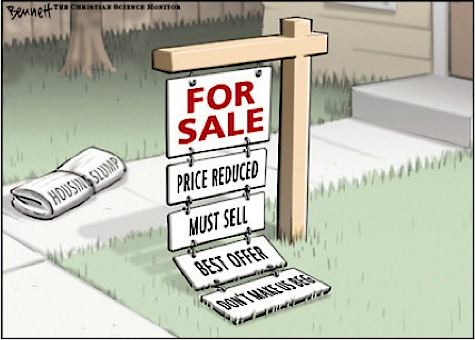
What’s The First Time Home Buyer Credit
New in 2009, President Obama has reworked this particular tax credit. What is this all about? Let’s get rid of the government wording and take a look at what’s in it.
1. The amount of the tax credit is the lesser of 10% of the cost of the home or $8,000, if you purchase your house in 2009 but before December 1, 2009. This is an amount deducted from the payment you owe. Here’s the best part: You don’t have to pay it back! Think of it as an $8,000 coupon off the cost of your house.
Now what about those home buyers who bought their house the year before — after April 9, 2008 and before January 1, 2009 to be exact? Well then, they’ll qualify for the old credit, which is the lesser of 10% of their home’s cost or $7,500. There’s a catch though: this credit comes across as something like an interest-free loan, which needs to be repaid over the span of 15 years (or recaptured on a home sale made before 15 years is up). So clearly, we can thank the stimulus plan for sweetening the deal here for 2009 homebuyers.
2. You can apply the credit to any single family home used as a primary residence. In other words, if you occupy the home, it counts. While vacation homes, rental, investment or commercial properties won’t.
3. To be eligible, you’ll need to have a maximum income of $75,000 (or $150,000 with a spouse). If you go over this maximum but earn up to $95,000 (or $170,000 with your spouse), you’ll get a reduced credit. The credit phases out as your income rises, such that above these limits, you’re unfortunately out of luck and won’t be able to qualify.
4. The credit is exclusively for “first time home buyers”. That is, when you buy a home this year, you’ll qualify for the credit only if this is your first home or you haven’t owned a home in at least 3 years from the date of purchase (or for those who built their house, the date you first occupied it).
5. Plan to stay in your home for at least 3 years or you have to pay the $8,000 back!
Sounds good? The government wants you to buy a house and they are willing to pay you to do it.
Is It Time To Buy A House In This Current Market?
Of course, this incentive shouldn’t be the main reason for you to consider a house purchase. Putting up with the sticks, the leaves, the things that break at the wrong time, the bills, and the strange neighbors are worth it not only because of this stimulus program but also because of the many other benefits that come with home ownership.
If you’ve been thinking about taking advantage of the real estate market slump, there’s no better time than the present. Not only are the home prices in many counties and neighborhoods much lower than they’ve been in recent years, but also consider the financial incentives for making a home purchase today. If you’ve been thinking of getting your first piece of real estate, then this year may be a really good time to do it — you’ve got a buyer’s market and some of the lowest property prices in recent memory, and you’ll be able to take advantage of the $8,000 coupon to boot! I envy all those people who sat through the real estate market and waited for better prices.
So who’s buying their first house this year?
This guest post was brought to you by Tim Parker from Elementary Finance.
Copyright © 2009 The Digerati Life. All Rights Reserved.

{ 33 comments… read them below or add one }
Finally, someone else is saying it too!
I’m in Australia, but similar things are happening here too that make buying a house (especially your first one) a very strong investment in 2009. For instance, first home buyers in Australia are eligible for up to $21,000 in government cash until mid year, or $14,000 if they buy a property that is already built.
I’ve got some tips for negotiating house prices on my blog if your readers are interested. I also rant and rave about my mad theories of residential property life cycles too, though I’m not sure how serious anyone will take that! 🙂
Get in on property while the other chumps are snoozing I say!
I agree with the general premise, but I would wait until we are at least halfway through 2009 or preferably late 2009 early 2010. We still aren’t in line with historical prices in the overall picture, so some places still have a ways to go before real estate is really cheap. Of course, this depends on where you live, as all real estate is local for the most part.
Also, buying a home isn’t an investment, it’s a place to live. We got the reason for buying a home all mixed up in the last decade or so.
I just started a first time home buyer series to help guide all the people now interested in home ownership. I think the drop in prices, the government’s incentive and the low interest rates will tempt more people to jump in. The second part tomorrow will address if you are even ready to be a homeowner, some people don’t anticipate the annoyances like peeling paint, broken appliances etc.
It could be a good time to buy a home, but a lot of the benefits of this will go to the sellers, instead — the government will be paying them a little extra to dump their property. Since it’s good for the buyers and good for the sellers, it looks like this is going to continue the same old trend: people who don’t own homes are being taxed more to subsidize people who do.
@Sentient Money – Aren’t we still in with historical prices? I’d be interested in looking at that data source, could you please point where that can be found?
I don’t understand why this is only for first time home buyers. The point is to jump start the market, so why limit it this way? The same could be said for the phase out clause for earners. Why not give a credit to everyone or at least raise the limits. There are many parts of the country where earning over $75k is just scraping buy. Why must everything be an attempt at redistributing the wealth. I thought the point of stimulus was to get the market going again and not class warfare. I am sure if the bulk of voters were in the upper class, this would be targeted at them.
JD, I agree wholeheartedly. Plus we have a lot of people who need to sell immediately due to loss of income but want to possibly still own instead of being stuck renting somewhere. These incentives could help them sell and buy if they weren’t limited to first time buyers.
Hey guys,
I been on hiatus for a while, but I’m catching back up with all my favorite blogs. Wanted to share my thoughts that this is a great time to buy real estate. Not only for “first time” home buyers as defined by the bill, but for those looking to move up as well. For move up buyers, the scenario is this: House is in a lower price range so typically the price decline or slow selling is worse as the price goes up. There are less buyers at higher prices and more defaults at higher prices due to the exotic type mortgages and ability for those in high income, but low wealth to leverage themselves. Thus, by selling a house in the 150-200k range, you will see less of a loss than the seller in the 300k-450k range. Thus if you are moving up you will see a better deal when you buy and get a better deal when you sell. Of course, you have to be pretty confident in your ability to earn and your finances in order to do this, but now is the time for move up buying.
All the best to my digerati folks!
joe
Nice article. I happen to be in the same boat in that it is difficult to come up with the down payment. For financial purposes, I would like to purchase a house before December 1, however, my budget is not allowing me to do that. Currently my wife and I are saving between $1000 and $1200 a year to purchase a home, but it will not be until next summer until we will be able to have the full down payment.
There are many HUD homes in our area (SE) at greatly reduced prices. I mean houses that sold for $120,000+ two years ago now listed for $50,000. They may need a little clean up and work but you will get a buy. Yes, now is the time to buy if you are able.
I think its a shame that if you purchased a home last year and got the first time homebuyers credit you have to pay it back. Now if someone purchases one within months they don’t have to pay it back
My girlfriend and I just closed on our first home today (3/23/09). We live in Portland, Oregon. Home prices are actually affordable in some parts and our market is more stable than many other parts of the country. We felt it was a perfect time to buy, but our motivation for buying was to stop being a renter, not become rich from buying a home. We realize that our purchase may depreciate further for some time to come but we are confident that things will turn around and return to the pre-bubble era when houses appreciated at a stable 3-4% per year.
I would say the additional $8,000 was a huge motivator for us, so I would venture to say it is having a similar impact on many families.
Good luck to all.
This is really good to hear for the US economy as there are many homes (unfortunately) up for foreclosure.
For any Canadians out there, we also have the same tax credit with a value at 5%. It works pretty much that same as in the US.
Don’t forget about the land transfer tax that is also a credit to Canadians.
We still aren’t in line with historical prices in the overall picture, so some places still have a ways to go before real estate is really cheap. Of course, this depends on where you live, as all real estate is local for the most part.
Great job, Tim! I’m putting together a best of RE blogs in my blog this week and I’ll certainly include your useful info here.
In the Dubuque, Iowa market we’ve still got a number of folks, especially the traditional first-time homebuyers, continuing to sit on the sidelines waiting for the magical “bottom” of the market. However, our market is actually back on the increase in terms of average sale price. We are still down from the 2007 highs, but gaining back ahead of where we were in 2006.
People can argue left and right about the ethics of the $8,000 credit (and they do!) but it’s now the law. If it fits your particular situation and you also want to take advantage of the never to be seen again interest rates, ’tis best not to sit idly by while the credit expires at the end of the year, interest rates skyrocket (thanks to the coming inflation), and this particular market contines to appreciate.
i think real estate business should also have some restriction from rising the prices of the land and they should very well know that every one needs home and the land is a gift of Jesus.
the system of broker in real estate business has caused prices to go high and now it is difficult to opt for big property or house.
First time home “buyer” is not correct. It would be more accurate when stated first time home “owner”. My father “willed” part of a house to his family ……since I have never “bought “a house. I don’t qualify……….under the law, I’m not a first time home buyer.
The current tax credit is such a wonderful opportunity for first time home buyers, yet as a mortgage loan officer, I find that people aren’t willing to do what they need to do to get their credit scores in order so they can qualify for a loan and take advantage of this free money. It is so sad to watch people waste this golden opportunity.
I think this is an excellent opportunity for anyone looking to buy a house. It really helps you at the most important time, saving for that initial deposit. I know when I was looking to buy my first home I struggled to get my deposit together.
We’re a property management firm in Alexandria, VA and a lot of our clients are totally going in this direction. Actually, the really brilliant move is that they move out of their existing house, have us rent it for them, and use all this stuff to buy a new one (assuming that they qualify for some of the stuff).
Lots of great tips here for people new to the market. I wonder if your readers might like the other great info on this new site.
Could you take a look and let me know what you think about the info. You’ll see stuff for buyers, realtors and some easy to enter contests.
Is the Home Buyer Tax Credit the greatest deal you can get in 2010? It’s not just for first time homebuyers; it’s also been extended to encompass those homeowners who are interested in moving to a new house after 5 years in their principal residence.
The 2010 Homebuyer Tax Credits, which were supposed to expire in November 30, 2009, have now been extended by the government until April 30, 2010. Here are some of the particulars:
If you are a first time homebuyer or someone who has not owned a home in the past three years, you can be eligible to receive up to $8,000 as a tax credit.
Those who’ve resided in their current home for 5 consecutive years out of the past 8 years can receive a tax credit that’s worth up to $6,500 if they decide to buy a new house.
To receive any of these tax credits, you’ve got till April 30, 2010 to sign your binding contracts as a home buyer. You’ll need to close by June 30, 2010.
To qualify, there are income limits: $125,000 for singles, $225,000 for married folks. The tax credit is subject to income phase outs.
Some other interesting facts to note: it appears that the first time home buyer tax credit is working as intended, with the statistics showing an increase of new home buyers from 41% to 47% of sales within the span of a year. These were the best numbers on record since 1981, beating the peak set in 1991 with 44% of sales attributed to new buyers. With the news being good, the government is hoping that more “move-up” home buyers will be encouraged as well, so they’ve gone ahead to pass the tax credit extensions into law.
I still remember a mere few years ago when many of my friends and relatives couldn’t wait to become new homeowners. And not just for the sheer pleasure of owning one’s very own residence, but also to be part of the wave of new landlords and home flippers who couldn’t help but be swept in that go-go real estate era.
Fast forward to today — and most of these once very eager would-be homeowners have now developed a wait and see attitude, wondering if property prices will go lower. But I believe that if you’ve got the finances in order and have been interested in buying a home for a while, the time is ripe for great deals in the property market. It may be worth checking out a mortgage lender for more information and to get you started in the right direction.
This is really a good deal that probably will not come around again in the near term with the budget crisis the US is having. Many people think this is for first time buyers, but it can be for anyone who has lived in their house for 5 years (watch the rules if married).
You better hurry if you want to take advantage of this, it usually takes about a month to close on a house.
The planets are well-aligned here for first time home buyers. Not sure how many people are necessarily aware of the tax credit — surely a lot are. But it’s good to know that this thing (the tax credit) got extended for a few more months and now covers not just would-be first time buyers but also those homeowners just aching for a change after so long.
Prices have crashed around where I live, but nobody is jumping to buy just yet. Could be that people are just generally broke.
I am planning to buy a house soon and this credit is just icing on the cake. But make sure you have the money to buy before jumping in. Don’t get into the cycle of borrowing more than you can handle just because prices look good.
This is a great opportunity for home buyers to save some money but they should be sure that they have the money to begin with before they buy a new home. Hopefully with this tax credit being extended for a few more months, more people will jump at the chance to own a new home and take advantage of it before it is gone.
In my area of Massachusetts, the 1st time home buyer tax credit has been a big help for keeping the inventory low at the bottom half of the market. This of course is great for creating stability in the market. It would be great if it was extended again.
Thanks for the info. Really helpful. We are a local listing brokerage for HUD owned homes and are always looking for resources for our buyers.
Forgot to add our blog in. It’s e3california.blogspot.com. Take a look and let us know your thoughts? Ever bought or sold a HUD Home?
2009 wasn’t a good year for me to buy a property. I lost it.
I recently started my career as a sales professional and am looking for a new house. So this is a nice post for me. Thanks a ton!