Various ways to predict inflation.
We all can’t wait to emerge out of the clutches of this economic recession. The government has done its job to jump start the economy, with many attempts to revive it through a massive stimulus package and a series of bailouts. All well and good, but then there’s the payback. Could we end up facing inflation in the near future? As the economy starts to pick up, should we expect an increase in prices too? Well, that remains to be seen, but let’s explore the possibilities here.
Predicting Inflation
Apparently, anyone can predict inflation. There have been studies that have shown that both professional economists and consumers alike have been successful at forecasting inflation, albeit through different approaches. Both arrive at pretty much the same conclusion and can be fairly accurate at sensing impending price increases.
But while experts use numbers, charts and statistics such as the unemployment rate, money supply growth, exchange rate fluctuations and various market indexes to track the economy, consumers can also detect what’s going on based on what they see at the cash register. As consumers, we can use our intuition to tell ourselves what’s in store: our weekly grocery bills and gas bills may be enough to give us an inkling of things to come.
Using Commodity Market Prices As An Inflation Indicator
So can I simply trust my gut to warn myself of inflation ahead? By checking the weekly prices of puppy chow and pancake mix, and by gluing myself to financial news stations, I’m supposed to be able to tell where rates will be going. Well, I’m not sure about this. That’s because as an investor, I prefer to approach things a bit more technically, if possible. Some supporting analysis will add credence to what my gut tells me.
In my research, I’ve found some interesting facts about inflation. Gold and commodities can be used to forecast and beat inflation. Here’s one video that shows how one commodity market index, called the Reuters-Jefferies CRB Index or NYBOT_CR (fancy name), can be used to see where overall prices are headed.
Click this link or the image below to watch the video.
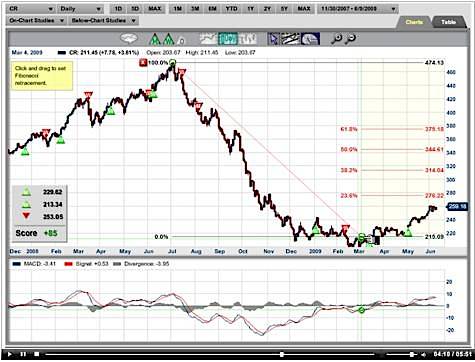
Considered to be a well-recognized benchmark for global commodity markets, the Reuters-Jefferies CRB Index (NYBOT_CR) is used as a technical indicator for large cyclical trends in the economy. The index tracks 19 markets including:
- Metals: aluminum, copper, gold, nickel, silver
- Energies: crude oil, heating oil, natural gas, unleaded gas
- Grains: corn, soybeans, wheat
- Food & Fiber: cocoa, coffee, cotton, orange juice, sugar
- Livestock: lean hogs, live cattle
While traders using technical analysis do trade this index, you can also use the same analysis just to get the bigger picture on economic cycles (inflationary vs deflationary trends). I found this to be a useful approach for gauging one more aspect of the economy, and to lend some support to your suspicions about what could be happening to your grocery bill.
Why do we care about this? Maybe you’d like to get a heads up about how your budget will be affected going forward so that you can be proactive about your money. Maybe you’d like to ensure you’re in the right investments as well; knowing what’s ahead, you may be inclined to add some gold, commodities, REITs and TIPS to your portfolio, or you may desire to keep your money in short term funds and liquid high yield savings accounts to await a (relatively) higher interest rate environment ahead. For more information, you can check out this post on how to beat inflation using various strategies ranging from buying TIPS to hedging with gold.
Copyright © 2009 The Digerati Life. All Rights Reserved.

{ 2 comments… read them below or add one }
Consumer prices might also lag behind growth in the money supply; so while massive amounts of new money have been pumped into the system, it takes a while for that to show up in higher consumer prices.
Commodities as a class do offer different characteristics and behavior (lower correlation) than other assets which would warrant some exposure to them. However, it is the approach to gaining that exposure in one’s portfolio that makes a difference.
Purists (like myself) would say that investing in energy stocks, healthcare stocks or mining stocks is simply investing in sectors of the equity market. So it is neither commodity investing nor asset-class investing. I would argue that by indexing the general stock market, you get exposure to all of these sectors and even commodities with out specifically increasing your risk by investing directly in them or focusing on any one particular area. That would involve owning companies that produce oil or wheat rather than owning oil or wheat directly.