We all want to know how to survive a recession. It helps to have a long term outlook. Here are some helpful steps to make when an economic downturn hits.
How do we know when we’re in a recession? Interestingly, we’ll only know in hindsight. We won’t know whether we’re in the throes of one until the economic numbers are in, telling us what we already know and feel. During the “memorable” recession of 2008 we heard what some of the more bearish economists said:
David Rosenberg of Merrill Lynch expects home prices will decline 15 percent in 2008 and 10 percent more in 2009. He predicts that unemployment — which jumped to 5 percent in December from 4.7 percent in November — will hit 5.75 percent by year end and 6 percent by early 2009.
I’ve also got a friend who constantly sends me “chicken little” messages on a daily basis, where he ruminates over the next financial institution collapse, or ponders over yet another town that folds under foreclosure.
While he’s excited over the prospect of scooping up some bargains in real estate when the property market bottoms out, my spouse on the other hand is quite a bit worked up over the news he reads in The Economist, about how the overall macro economic situation we’re facing isn’t boding too good for our investments.
I remind him though that this is expected to be a short term situation. It’s short term in the whole scheme of things. I usually succeed in appeasing his concerns by reminding him that we’re fairly well diversified with an asset allocation that suits our age, goals and basic risk profile.
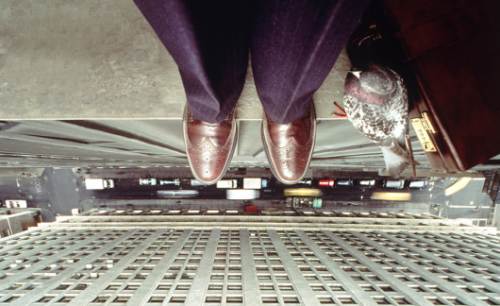
I just go back to some well-worn advice I’ve read and followed whenever these rough times come upon us. As an investor who has lived through a couple of recessions (wow, that dates me!) and economic cycles, and who continues to further my financial learning, I found that there are things we can do to help us ride through a tough market cycle.
Here, I’ve collected some tips, facts and reminders that I found to be valuable and assuring during times like these:
How To Survive a Recession
#1 Spread your risk, be diversified.
Investing across the board is way more important during bear markets, when your assets can really get hammered by volatility. Make sure you’ve managed your risk with a diversified, well-balanced portfolio.
#2 Think long term. Recessions are usually short.
Eight out of the ten recessions we’ve experienced over the last 60 years have lasted under a year. The two most recent recessions we’ve had — in 1990 and 2001 — lasted only 8 months each. Though you won’t be able to avoid temporary losses during a downturn, the long term has been much kinder to investments, with returns averaging 10%.
#3 Act conservatively.
Make cautious, conservative financial decisions. Some examples:
- Think of renting until you feel that the property market has bottomed — and it may be a while before it does!
- If you’re buying a house now, apply for a fixed rate mortgage.
- Don’t take on additional debt; pay with cash to avoid the temptation of overspending.
- Make your emergency fund a priority over spending for big items or taking on investments.
- Live within your means.
- Get a full employer match through retirement fund contributions.
#4 Be patient and stay the course.
Lots of people are tempted to bail out on their poorly performing investments when things go south. But they may be jumping the gun by unloading assets that could very well recover nicely once the markets improve. I’ve been whipsawed in the past, and I’m not about to fall into that trap again! Avoid tinkering with your portfolio and acting on emotion.
#5 Consider being a contrarian.
The recession will pave the way for lower stock prices and cheaper purchases everywhere! Why not buy low?
#6 Look into future trends.
You might feel better about the stock market when you realize that it is a forward indicator and tends to track ahead of the economy. So even as we’re steeped in the gloom of the economy, the market itself may already be picking up and recovering. Conventional wisdom states that the market recovers around 6 months before the economy itself does.
#7 Look at valuation.
Recognize that stocks have already deflated. Well-priced stocks won’t have far to fall despite recessionary conditions. The stock market has already gone through some beatings, which makes it less likely to fall significantly further.
#8 Recognize that bad news is already priced in the markets.
With all the unpleasant news that’s been released, a lot of the bad mojo has already been absorbed by the markets. Could it get any worse? Only if the news is significantly unfavorable.
#9 Realize that the markets and the economy have support.
Whether or not you agree that the Fed should step in and “bail out” failing institutions and other financial channels, the Fed’s strategies have worked in the past to turn things around. Also, the economy finds support in the fact that it functions in a global environment.
#10 Don’t fight the Fed.
The actions of the Fed will have ramifications later on. It would be foolish to go against expected trends.
#11 Evaluate your job situation.
If you’re worried about your job, be proactive and look into other options before anything happens. Other tips:
- Beef up your skills, keep your resume updated, explore career changes before the axe falls. Keeping one step ahead of possible eventualities is a good thing but avoid charging ahead and acting without a plan.
- If you do happen to get laid off, file for unemployment benefits right away by visiting this site for more information. You can also review your health care options (such as COBRA or other coverage).
Sometimes, talking to others about our financial outlook can become depressing, when people bring up issues such as the falling dollar, the massive spending we’re making towards a seemingly endless war, the threat of foreclosure looming over certain neighborhoods, the choppy markets, and once mighty financial institutions now struggling. But if history is our teacher, staying the course and looking out long term have served investors well. Just don’t let your patience run out or your emotions get the better of you.
Great Resources: Moolanomy’s 5 Strategies To Survive an Economic Slowdown, Money Magazine
Created March 25, 2008. Updated March 25, 2008. Copyright © 2008 The Digerati Life. All Rights Reserved.

{ 22 comments… read them below or add one }
“Don’t take on additional debt”
Better than that: get OUT of debt! Bad financial things are much easier to handle when you don’t have as many bills 😉
#12. Don’t be doom and gloom all the time and don’t think in a linear fashion. We’re in a cycle and it will come back around. One old timer in my industry said, “The greater the contraction, the greater the rebound.”
Interesting take on things, don’t you think?
Great article with good suggestions. This one is similar to one I wrote the other day titled To Worry or Not To Worry: Recession
If everyone would just read and apply #3 to their lives, I think things would get much better, much quicker. I doubt that’s likely to happen anytime soon, though.
I always think it is wise to save some money while you can. Be frugal as soon as you hear a recession is coming and tuck some money away in a low risk account. This has two advantages, you are already practiced in being frugal when the recession comes and you have some money for emergencies should you start to struggle later.
I’ve always been a long-term value investor and love it when the market shows off those beautiful red numbers. I pick up companies cheaper and upon recovery produce some good profits.
Right off the top of my head, I would advise:
– Saving your cash
– Don’t time the market, but keep an eye out for opportunities.
– Increase your 401(k) contributions.
Get them while their cheap because the sale won’t last.
Thanks for a very informative and timely article. Just when I was starting to panic about my investment portfolio being 100% invested in real estate, you remind me that things will turn around eventually. The key for me is to try and stay in the game before my money runs out. If I can do that, I will have learned a harsh lesson which, in my case, is a positive thing. I will never put myself in this financial position again.
Great tips! I am really trying hard to stick to thinking long term and waiting for the market to bottom out. We’re in the DC area and if ever there was a deal out there they abound now. But there’s more to come so I know it pays to wait.
My wife and I are already in the retrench mode. It’s a good thing we never spent beyond our means. We are in the process of looking for a house. It’s kind of fun knowing the prices will probably continue to fall for a while anyway.
I think staying the course is a problem that most people can’t seem to do. Since most recessions are so short (8-12 months you pointed out), why can’t people just ride that out. Your house payment is still the same, you are still bringing home the same amount of money.
Just continue living your life and prices will go back to normal.
Great post- good information. I can never hear this enough. Especially when I hear that the market is down again, and oil is up again….etc. How do you spell s-t-r-e-s-s?
Lisa
RESIST THE RECESSION AND DEFEAT THE DEPRESSION: A step by step guide for preparing for an economic hardship.
Seriously, buy it now! http://www.oldsouthpublishing.com Once you purchase it, you will get a download link. Great information….check it out
I also believe that if you have the chance, try positioning for a recession proof career. While there are no guaranteed ways of doing so, there are trends to look for that should help the decision-making.
When times are tough in the financial department, I always find price comparison sites really useful for being more frugal. I use them for CDs,dvds and blu ray discs
Surviving a recession simply takes patience and planning. Well that is if you have not spent beyond your means for the last few years. The most important thing to do in a recession is to protect your job. Now is not the time to go on an extended vacation.
this recession wont be short, its not a recession, the system has collapsed and a new one will take place. which? only time will tell
A little humor goes along way as we weather this storm! That is what keeps me going (yup, I’m one of those unemployed folks myself). I can’t control the situation, so I find things to keep me busy- – including job searching–and I listen to my Brady Bunch CD!
Unemployment and the Brady Bunch
It’s interesting to read this article over a year on from it’s published date. The figures it quoted for projected home price declines and job loses was very very conservative in comparison to what actually has happened.
Asides from that the tips are certainly valid even at this point of the recession.
Check out the site survivalinsight.com for more great advice on getting through the recession.
Recession — Everybody, everywhere and within their hearts think about this. Some have been shattered and have ended their life, which is really sad news and which should not happen.
Some are trying to meet both the ends meet, by trying one or the other,
Some think about this and cry secretly,
Some are frightened about their future and the list will go on and on.
Very informative and uplifting article. I am a laid off CPA and I may have found a new skill or career to provide or supplement my accounting income when I get a job. Stay positive, in the future you might look back at this as being beneficial in some sort of way. thanks.
Thanks for the post, great information. People forget that making small changes can make a huge difference in their overall financial status.
Not sure how every state is doing but I know the state I live in hasn’t recovered much since 2001. There are more people out of jobs around here than ever before, and most of their financial status is in the dumps. I was lucky enough to have gained skills over the years I could use to support my family when I lost my job.