As a nation, we’re experiencing a return to frugality. So how are you economizing?
As the economy slides downwards, behavioral trends are also shifting as people are making the necessary adjustments to the new financial realities they face. As certain economic realities begin to dawn upon most of us and we start feeling the pinch of higher prices, lower investment returns and a slowdown in the job market, we’re finally taking stock of our financial situations and actually making some concrete changes. At least, that’s what some newspapers have been reporting lately.
Will Economic Changes Herald a New Frugal Era?
At some point, most of us probably realized it was time to “pay the piper” and time to sober up, say goodbye to immediate gratification and return to fiscal discipline. It usually takes quite a lot before people change their ways, so the economic pressure must be across the board for the tide to turn. SFGate lets us know what’s eating us lately:
The shop-till-you-drop era may be coming to an end. It couldn’t last because it was built on a mountain of money borrowed from overseas.
The housing crash, a severe credit crunch and a dizzying fall of the dollar are depriving the nation of the means to keep on borrowing and spending. Foreigners have become wary of underwriting the U.S. standard of living. The flow of outside investment is slowing.
The United States has maxed out on its national credit card. Like it or not, that’s one of the most important things now forcing a new standard of frugality on free-spending Americans.
The go-go spending years came to an end when the property market went bust. Because of the housing decline, foreign investors have pulled out of American investments thus weakening the dollar further: this has caused prices of imported goods to increase — no thanks to the weak dollar — and has resulted in tighter credit (due to less demand for mortgage-based investments).
And now it looks like the economic pendulum is swinging: our nation, engulfed in consumer debt with bragging rights to a 0% savings rate, is apparently now moving in the right direction. The International Monetary Fund predicts that household consumption will fall further in the next couple of years and that a “prolonged period of belt-tightening” has just begun. Some economists are even calling recent trends as an indication that “we’re facing the birth pangs of a new economic structure.”
Neal Soss, chief economist for the securities firm Credit Suisse First Boston states that “the next year or two or three will be about the transition to a new equilibrium. Consumption by households will grow more slowly than their incomes, which is the exact opposite of the last 25 years when consumption grew faster than incomes.”
How To Go On A Recession Diet
With resources running dry, investments down, home equity dwindling or all tapped out, and limited credit available, we’re seeing how real people are finally “retrenching” and changing their behaviors along with the times. Some new standards for frugality are now being set across the nation.
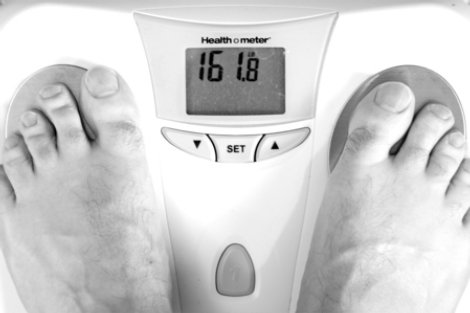
Families everywhere are now adapting recession diets that look something like this:
- Prioritize where your money goes. This study mentioned in the NYTimes implies that people are already prioritizing 😉 .
In a survey conducted this month by the NPD Group, a research firm, consumers suggested that they would sooner cut spending on clothing, furniture and eating out than on video games.
- Patronize cheaper stores. Seems like everyone is picking up on this idea already:
Chains that emphasize low prices, like TJ Maxx and Wal-Mart, are thriving. And cut-rate supermarkets, like Save-A-Lot, are swamped.
- Buy and use cheaper alternatives. For example:
At Home Depot, sinks and faucets are selling briskly. Managers at the chain suspect that consumers, loath to spend money on a splashy kitchen renovation or new roof, are settling for a cheaper bathroom “refresh.”
- Make food substitutions.
Mary Gregory, 55, a telephone company operator in Cleveland, used to eat red meat at least once a week. Now it is hardly ever on her menu. “I usually buy turkey instead,” she said. “Any recipe that calls for meat, like chili or spaghetti, I try to substitute turkey.”
- Do things yourself (if you can), especially if you’ve got the skills.
Carl Hall, a retired construction worker in Detroit, wants to buy a fence for his backyard. But he decided not to buy a finished product at Lowe’s, the home improvement chain where he was shopping recently. With money tight, “I am looking to put it together myself,” he said, adding that he hoped to save $200.
- Invest in things that can save you money in the long run.
Another top seller at home improvement stores: programmable thermostats and insulation, which can cut fuel bills.
- Book flights and make travel plans in a way that will be most economical for you.
George Goulet, 52, the business traveler switching from the Hilton to the Hampton Inn, now books flights that depart in the afternoon rather than the early morning.
- Stop buying new cars. Keep them around longer.
- Eat out less. Cut the frequency of dining out in half.
- Travel less. Take fewer vacations.
- Halt or delay spending on big ticket items. Postpone those big purchases as long as you can!
- Increase your household income: have a non-working spouse get a job. Or you can start a side business.
- Start budgeting if you haven’t already.
- Avoid the movie theater and watch your movies at home.
- Wear out your clothes longer.
- Cut out unneeded calories (junk food and drinks — that extra latte?).
- Quit your expensive subscriptions, hobbies, addictions. Or control your spending on them.
- Stay in an apartment for now and reroute the money you save into prudent investments.
- Stay home more often; you’ll cut down on gas bills.
From SFGate, I found this handy table that can give us a quick view of the shift in our financial mood:
What’s In and What’s Out In Today’s More Frugal World
| IN | OUT |
| Saving | Borrowing |
| Cooking at home | Eating out |
| Fixing the old car | New car |
| Staying at home | Foreign vacations |
| 20 percent down | No down payment |
| Debit cards | Credit cards |
| Working past 65 | Early retirement |
| Library | Bookstore |
| Tap water | Bottled water |
| BART | Bay Bridge |
| Patching | Remodeling |
| Public park | Theme park |
| Eyeglasses | Lasik surgery |
| Poker night | Weekend in Vegas |
| Brewing coffee at home | Starbucks |
| Flying coach | Flying first class |
Source: Chronicle research, BudgetSavvyMag.com
After seeing some of this empirical information, I’m curious to see how truly widespread this new movement towards frugality actually is. But of course, I’m betting that it only lasts as long as the economic slump does. Once the markets recover their footing, people will be able to retire their money fears, and will again be able to breathe easier about their financial prospects. And soon enough, most will be back to old habits. That’s just human nature.
In the meantime, I’d like to ask this: how much is this current economic climate affecting your personal financial outlook? And particularly, are you on a recession diet, and if so, what does it look like?
Copyright © 2008 The Digerati Life. All Rights Reserved.

{ 33 comments… read them below or add one }
Hi! Great article… this is definitely in the news a lot and is a trend in the making.
I am interested not only in what to do as a consumer, but how to re-tool a business to take advantage of this new trend toward frugality. There are HUGE business opportunities in this shift in thinking… starting blogs, websites, or businesses to take advantage of it could make some small business owners quite wealthy.
I wrote a blog post about this recently called “Three Business Ideas That Will Help You Thrive During A Recession that mentioned this trend and how to create a business that would help others to save money — and reward you, too.
I’d love to see you address this hot news topic from the business angle as well.
I wouldn’t say I’m on a recession diet, because we were already focused on eliminating debt, boosting savings, and generally being frugal. I come from frugal parents, so it’s just ingrained in me.
We are taking steps to reduce our food costs, in some areas. Now that we’ve switched to grass-fed beef, we actually spend more on beef, but we still don’t eat it very often. We may also switch to grazing pork, which is double the price, but also not something we eat often. I’m still deciding if we should spend more for free-range chicken. On the other hand, we’re buying more at the farmer’s market (including the meat), which has reduced our costs somewhat.
Yeah, I’m not really surprised people are cutting out on things like clothes, furniture, and eating out. Those aren’t really necessities and you don’t get a lot of mileage out of them (satisfaction wise at least). Video games on the other hand offer hours upon hours of play (and unlimited play for online games), so they’re a much wiser investment for cost-to-enjoyment ratio.
It’ll be tough to spend less on food since food costs are skyrocketing and things such as milk, eggs, and lots of other basic things are a lot more expensive.
These are good ideas no matter what the economy is doing. The state of the economy is effecting my decisions not at all. It will be good if more people behave responsibly with their finances (though I am skeptical) but it doesn’t do that much good if they are going to behave irresponsibly as soon as the economy overall looks better.
I’m not just on a diet, I’m on a spending fast! I started commuting by bicycle to work, we’ve eliminated dining out from our nearly non-existent “entertainment” budget, and we have become far more conscious of energy usage to reduce our utility costs.
I’m always trying to do more with less. As a result, the only debt my husband and I have is our mortgage and my student loan. We’ve done this not by denying ourselves things (for example, we love to travel and we do) but by thinking about the ROI we will get when we spend our money.
In college I studied economics and my favorite teacher used to say Americans had it all wrong and spent too much money and saved too little. He said eventually it would have to change. This is discussed at length in a great book called Empire of Debt that was published in 2006.
I would like to believe America is going to fix their financial habits because I believe that is what will bring back the true prosperity we had for the early to mid part of the 20th century. Unfortunately I am with you that this will only last as long as the slump. Once the slump is gone so will people’s new found financial common sense.
I’d start with one of the most wastful of American social acceptences: Buying big cars with big engines which waste and cost big on gas.
It pains me to see pick-up trucks, 4*4, mini-vans and more roaming freely everywhere. It’s just a matter of time before economy cars starts selling well in the US as well.
I have am seeing that most people I know are cutting back a little on the keep up with the Joneses things like showy homes, clothing and cars but not everyone yet.
I think the biggest change I have made is the not eating out (cooking at home more and bringing lunch to work) and buying clothes only when absolutley necessary and always at places like Target, H&M and Old Navy because they are almost the same and less than 1/2 the price.
Other things that fall off the budget when times are tight are gifts. They add up when everyone you know is getting married and has kids with birthdays. Target helps with more affordable options there too.
I also do no-spend-days or no-spend-weeks when I can and try and save energy at home. I also got a TV converter box with the coupon rather than a whole new TV for this digital changeover thing happening in 2009.
I agree with Michael, Americans have a bad habit of spending too much and not saving nearly enough. This really could finally be the wake up a lot of people needed and will hopefully have a lasting, positive impact on our country and economy.
We’ve been doing most of these frugal suggestions for our entire 17 years of marriage. The frugal “recession lifestyle” is second nature to me. I think those of us who are already in the practice of living well below our means are going to be able to help spendthrift friends make the transition to frugality more smoothly. All those friends who thought we were crazy for: taking cheap vacations [every other year], eating at home, DIY home repair/remodel, not going to the mall, wearing out our clothes, etc. are going to be knocking on the door asking “um, how do you do this…”!
Fantastic article. Thank you.
SVB,
I’ll believe it when people stop using cell phones 🙂
I’ve never been into a lot of material things so it’s easy for me to scale down when needed. Eating out is over-rated and it makes you fat. There’s plenty of places you can travel to and not spend a fortune when you get a suite with a kitchen.
very nice article! and thanks for the tips.
I’m on a recession diet as well…i plan and note what ever fixed expenses i have on particular months, and proper planning helps me a lot.
@Safety Harbor – It’s not that “over-rated”, to be honest. I feel like eating out once every month; it could do some good for people who want to build muscle for body building and what not.
I am not sure if credit cards are out. As long as you do not overuse them, you should be all right
People need to stop treating their houses like ATM cards… I know several people that decided to take all of the equity out of their house to buy toys like boats and cards… Then a year later the housing market crashes, and now they’re upside down in their mortgage…. This problem is one of the biggest reasons of the economy spiraling downward… People losing their houses to foreclosure.
I wouldnt say either that im on a recession diet. about 4 years ago i had to go through a debt settlement program and swore to myself i would never go back. We have been living frugal for quite some time now.
I think america needs to think of the way things used to be if you didnt have the money, you didnt get it. Credit has been a issue in our household for sometime now. We have realized that we need it to get by sometimes, but the days of shop till you drop have been gone for years now. We recently needed credit to replace our furnace (no credit no heat) It made me angry to use it but it was a necessity. Now im stuck with the bill. But the days of the bill comming from electronics, clothes, and events have long been over.
I have mainly spending more time at home, blogging about advice on living very cheap and dealing with debt, and how to stretch the all mightly dollar just a little bit further. Its refreshing to know im helping others not only myself to stay out of debt.
being debt free is definitely a very disaplined lifestyle, but a better one. I dont have all that i want but i have what i need to get by. I dont have a new car, but i dont have the bill either. I dont have a new house that im proud of, I have a old one that i have to fix but the bank aint comming for it. I do have nice name brand clothes but they are from 2nd hand stores no one knows but me.
Its these types of things that are keeping our family out of debt. Frankly the recession hasnt hurt our family because we are pretty broke to begin with. We live on a little, but we are alot happier
essentially we need to return to the core financial principles that many of us were engaging in ten years ago prior to the last boom time. Unfortunately when an enconomy is in the boom years people lose track of good habits such as being frugal and trying to reduce their cost base where possible of taking on excessive debt burdens.
us americans need to live smarter and not be swindled by the snake oil salesman again and again! for the moment we could do better by tightening our belts, both in terms of our debt and our waist lines!
Nice article, thanks. Very useful information.I read it 2 times cause there were some moments I didn’t understand at first.
Before, I used to buy and eat my food outside… Now, I always cook my own food; and I save a lot. =)
Many people sit here and say they would have no problem cutting back. It’s a little bit more difficult for me to do. I have necessities that I will be buying all the time. With the state of the economy I have tried cutting back and have actually been doing pretty good with it.
I saw in the news the other day that sales of Spam (the canned food, not the annoying email) and noodles have spiked because of the economy. But, if the economy is bad, won’t people eat more fast food?
Good article. Thanks for the tips. This should be done regardless of the state of the economy!
Interesting that you say that. In Australia at the moment, the government is giving homeowners up to $1600 in rebates to install ceiling insulation, solar panel cells and solar hot water systems. This is all good for frugal home owners or those facing tough times as it reduces their homes energy consumptions and power/water/gas bills. If only every other country was as forward thinking or financially stable to offer $4 Billion dollars to such initiatives..
Dani.
Great advice there. We could all stand to tighten our belts a little, pinching both our wallets and our waistlines. Eating at home is a great way to save money, restaurants stay in business because they’re making a profit on the food they’re selling; make the same thing at home for a fraction of the cost. For tons of healthy recipes, check out diet books.
This is a great article. My wife and I had already made a decision to shift towards the “frugal” lifestyle well ahead of the economic downturn…and we are glad that we did. I have traveled all over the world, and have seen first-hand how little many other cultures survive on. We are spoiled. We have already committed to driving our current cars into the ground, and paying cash for our next home. It’s nice to see that we are not the only ones thinking this way. There may be hope for America yet 🙂
This is all just common sense. Most people don’t realise that they waste so much money on unnecesary items like cars, petrol and junk food. I can’t believe the price of a candy bar now due to inflation. Even an apple would be cheaper :0
I have been doing most of this for a while, but there are some good tips in here..
Thanks 🙂
Yes, I agree that a good deal of this really is just common sense.
Rick
Sometimes you are forced to spend — like when your fridge breaks, what are you going to do? Let food spoil and spend even more money? But if you have to spend, hopefully you’re hunting for the best deals possible. For myself, if I have to spend on something, you bet I am going to research it to death. I will wait for a deal and on top of waiting for a deal. If I purchase online you can be pretty certain I will hunt for a coupon code upon check out. Use sites like couponsite.com to make saving money a little easier.