How will your money fare after the presidential elections? The following article was written before the elections were held, so it may be interesting to compare the views we had then to how things are today. Let’s review where Obama and McCain stood on some financial issues.
With elections around the corner, I thought I’d chime in on a well-worn financial topic — the one that pits our presidential candidates against each other on the subject of money. It’s about time too, since I’m receiving more and more (unsolicited) political messages and notices from my old friends via email; clearly, our political climate is heating up as we approach election day. So I’d like to take a break from the usual harping we’ve been doing here about the weak stock market and the unrelenting economic crisis to do a quick run through on where the candidates sit on some issues.
Obama vs McCain, Which One?
I’m seeing that Barack Obama offers us ordinary citizens more services, for a price. John McCain, while applauding the Federal Government move to rescue the economy, wants to cut our taxes even more, especially for the richest 10%. He intends to pay for the government’s needs by limiting the war in Iraq, cutting “pork” from Congress, reducing the military budget, and by hoping that the tax cuts will result in more business nationwide.
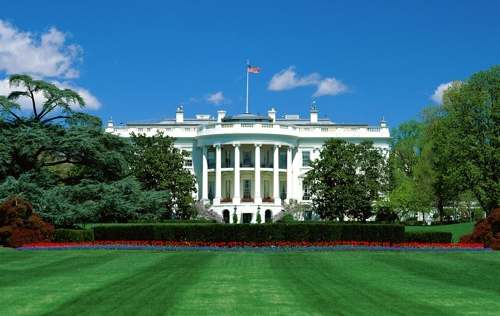
Our Mass Transit System Is Pitiful
Obama wants to spend more than 60 billion on fast Internet services (we are way behind Europe in this area), better education (though he refrains from offering vouchers), on rebuilding our nation’s infrastructure such as high-speed rail (again we are way behind Europe), and on research on alternate fuels. He plans on raising taxes for those who earn more than $250,000 a year.
The Trickle Down Economy: Do You Hear The Tinkling?
Meanwhile, McCain is apparently favoring the trickle down economy trumpeted by Ronald Reagan. It means that when rich people and companies are doing well, the financial fruits will come trickling down to the average Joe. And for rich folks to do well, he plans on lowering their taxes too, hoping they will invest their excess money into new industries and new jobs (hoping doesn’t cost anything).
Welfare State?
Conversely, Obama would like to emphasize plans to help the less favored by lowering taxes for seniors, students, low income workers and mortgage owners (we lost quite a few of those in the last 12 months). According to Roger Lowenstein, “McCain would continue his non-interventionist approach.” In other words, he favors letting the markets decide who wins and who loses. Or said another way: he prefers to let the markets do as they will, with the government not intervening so much.
O The Once Mighty Dollar!
It is fair to state that Obama doesn’t quite explain where the needed funds would come from and neither candidate has mentioned that they cannot spend money not approved by Congress, a huge hurdle indeed. Meanwhile, the huge federal deficit means that the U.S. is printing money 24/7, another little fact not mentioned by financial pundits. The immediate consequence is to make the already weak U.S. dollar lose its value even further, making all imported products (is there another kind?) much more expensive for you and for me.
Enough Debt For Three Generations
In general terms, Obama’s economic proposed policies would benefit the average citizen with lower taxes, more education tax breaks, and more social programs for the less fortunate. The cost will probably be more elevated than McCain’s by as much as a trillion dollars — hey, if you can’t imagine how much that is, you are in good company. Not even the Secretary of the Treasury knows that, since he keeps changing his estimates by a few hundred billions dollars at every press conference. Obama may be thinking that it’s not his money, so he really doesn’t care if your great-grandchildren have to foot the bill.
Spending To Deliver Promises
Another expert calculates that under Obama, those making between $37,000 and $66,000 would see their taxes go down $1,118, while under McCain’s plan, the same citizen would pay $325 less. But while Obama’s plan seems more attractive, remember that all that money has to be compensated somehow, somewhere. Both candidates can promise the moon, but to deliver on these promises is an entirely different affair.
Update on Presidential Elections
We finally have a new president, so what do you think of this “change of guard”? Maybe this is what we need to shake us out of our economic funk and gloom… at least, in the psychological sense. How awesome it is to see the whole world excited and thrilled over the U.S. elections (and results):
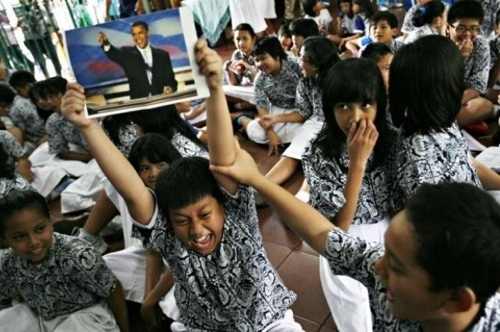
Like everyone else, I’m hoping that this new administration will get the tide turning and help us focus more on the positive. At least, that’s what voters are expecting now that the balance of power has shifted in government. Don’t we usually vote for change if we’re unhappy and poorer after a given presidential term?
Anyway, Obama’s win gives the media an excuse to print some good news for a change. 😉 Frankly, the constant drumbeat of negative economic news has been draining, and like many of you, I’ve been uncomfortable having to monitor our finances, seeing the red in almost all its aspects.
How do you feel about Obama running the country? What are your thoughts about this administration?
Copyright © 2008 The Digerati Life. All Rights Reserved.

{ 41 comments… read them below or add one }
Neither of these guys will be able to spend, so just put that out of your heads. This financial crisis will prevent that. It might even make McCain raise taxes. Don’t think so? Well, Bush, Sr. did after he promised no new taxes.
One of the things overlooked when candidates promise to raise taxes on those making more than $250,000 is that many of those people are small business owners reporting income on their personal tax returns. If they get taxed into oblivion, they will pass those costs down to others, meaning fewer jobs and increased prices of goods and services.
here is a helpful graph to help parse the tax plans.
also worth noting, to correct the article, is that obama has addressed where to get some of the money — he’ll be promoting certain programs by cutting others, which includes the cutback that will come from starting to phase out troops in iraq.
Mitchell,
That’s a cool image. I am now very tempted to update my post to include it. Hmmm… i think i will. Thanks as well for clarifying how Obama was planning to borrow (or get) from Peter to pay Paul (as the analogy states).
Great find, Mitchell!
You keep talking against “trickle down” economy, but you are forgetting one thing: these larger businesses that will be taxed are those that pay your salary. They are also those you own via your 401K (unless you plan to be out of the market forever). Businesses that earn under 250K aren’t those that hire people. You think taxing these companies will mean they’ll give you a raise while paying less to their CEO? Think again. Your salary will suffer first. Also, if companies earnings are smaller because of taxes, company stock goes down. Yes, this is exactly what is needed in current economy. Are you enjoying the ride down? Incidentally, Hoover raised taxes too as well as interest rates after the stock market crash. Did his economy worked?
As to the Reagan, I was there. Before him, we had a double digit inflation and a recession. I was a teaching assistant, and I got a tax cut, so it wasn’t just for the rich – unless you think that $500 a month is a lot of money. I didn’t care that some rich people got to pay less, I cared that my purchasing power increased and that there was a job for me after I got my MS. It also got us out from the recession. Was Carter good for the economy?
You keep saying how “trickle down” economy doesn’t work, yet throughout history there were example of wealth redistribution that were disastrous.
Kitty,
Thanks for your comment! On the contrary, I didn’t think the article (if that’s what you were referring to) was being critical of the “trickle down” economy. I, for one, am in favor of it. And like you, I also expect that wealth redistribution isn’t something that would work too well.
where does the money come to pay? you also forgot to mention that mccain wants to have a govt spending freeze.
look, the next administration will not be able to do most of either of their programs, whether it be huge tax credits to social programs.
if mccain wins, there will be a larger democrat controlled congress. chances of getting anything done like a govt spending freeze or reducing pork will not happen, because neither side wants to do it although it would be good.
if obama wins, there will be a larer democrat controlled congress. they will have to do some if not many of the social programs and tax credits they ran on during the campaign.
the outlook: ain’t nothing going to change, except increased deficits either way. what i do know is that whoever is in office will not be there after the first term, and congress will change hands again.
MCCain and Bush are one in the same. MCCain does not give a damn about the anything else besides war and oil. He is just a little shorter and older than Bush thats it.
Obama is the only shot we have to pull the economy back because he is more a domestic affairs president.
@Tim,
What you describe seems to be the predictable cycle here — we’re never happy, nothing much improves and we just keep swapping out incumbents. But it’s also typically the case that when somebody hits the Whitehouse, there’s a honeymoon period where psychologically, we’re all feeling just a tad bit more optimistic than we usually do for a limited period of time. Watch out for that dead cat bounce, relief rally in November sometime.
@Stock Market Pundit,
“He is just a little shorter and older than Bush, that’s it”. Okay you get the prize for funniest line in the comment thread thus far. 😀
@Kitty,
I wanted to comment further about the “trickle down economy”. I know the power of this type of phenomenon as I’ve seen it happen during the dot com period here in Silicon Valley. Everyone and their brother in the mid to late 1990’s made money. Big companies were raking it in and their employees were sitting pretty. People were coming to the Bay Area in droves, causing traffic snarls like I’ve only seen in the third world. You couldn’t book a nice dinner in Palo Alto without doing so many days in advance. The ritzy places were packed. Not only that, everyone from valet parking attendants to office administrators to babysitters all had more money and were charging a mint. You can thank the internet bubble for that.
So yeah, I really like it when the “rising tide lifts all boats”. Unfortunately, the sinking tide does the same thing too but in reverse, which we’re facing today. Financial contagion goes both ways.
You know – I think that the hardest thing on the planet to do is to run for public office. You have people who want you to do things for them, and only them. Plus you have to represent XYZ people depending on your constituency. So, what the problem is no matter what you do, there will be 40% of people will either love or hate you. Look at almost any poll on anything, and you usually have 50% splits with no more than 40/60 being extremes. By picking a party – you have to stick to the political platform of your party, so people have a “safe” thing to know that you believe xyz because you are a republican/democrat. So what is a person to do. In a two party system, they have to say they believe one way because they have to get the votes from their party faithful. McCain believe a lot of different things from what he has said in the last year while running for president, but he HAD to say those things to make sure the republicans vote for him. Look at what McCain has said and what bills he has sponsored over the last 2 decades. We don’t have a clearer record on Obama so that is also the same kind of wild card.
It all comes down to how will each of these indivdiuals vote. Will they vote how they feel, how the polls tell them, or how their party tells them.
I don’t like how the candidates just say their talking points and play to the lowest common denominator. I feel as though both men were “better” before they were nominated – especially McCain.
I think a key to success will not so much be the candidates themselves, but the kind of people they retain.
Why is Carter blamed for the 70s recession and Reagan lauded for ending it (even though the economy all through the 80s sucked even when we weren’t in full recession!) when we all know the President cannot affect the economy single-handedly and that the Democrats were the majority in both houses of Congress back then? The situation was a lot more complex than conservatives want to admit. Carter had a mess on his hands to clean up from the previous administrations, anyway, and was only given one term to do anything about them. And then Reagan played politics behind the scenes to get himself into office. It’s all right there in the info about the Iran-Contra scandal if anyone cares enough to bone up on their history.
That said, I’m flabbergasted that fiscal conservatives still don’t understand the difference between tax-and-spend and borrow-and-spend. If you were advising a private citizen about personal finance and that person could not realistically cut their budget without going without something they needed, you’d tell them to get more income.
Now, that’s not a perfect analogy to what’s going on in the government. What’s going on there is the fiscal conservatives are telling this person with the shaky budget, “Keep going to the movies once a week and eating out for dinner five days a week. Stop paying for health insurance. Stop paying your rent. Get that iPod you’ve always wanted. Then go put it all on a credit card.”
When self-styled fiscal conservatives take over Congress and they cut welfare, they cut Medicaid, they cut school lunch programs, they increase unnecessary military spending, and then they issue a whole truckload of Treasury securities to pay for it all, that is exactly what they’re doing.
But the “tax-and-spend” fiscal liberals are the bad guys. I don’t get it.
If more of the big employers went out of business, sure, people would be out of jobs. They wouldn’t necessarily be out of income, though. Drive through a poor neighborhood or a small isolated rural town sometime. They don’t have the big companies there either. What do they do? Start their own businesses. We can do that too. And if our businesses are smaller, wouldn’t they be taxed less?
There are ways to solve our problems but we should probably stop leaning so hard on labels and stop rejecting good ideas outright and stop clinging to mythology first.
I am always amazed at the idea that we should keep lowering taxes to boost the economy. How far can we go? Why not simply eliminate taxes altogether. That would really send the economy into orbit??
Republicans have always favored the upper class; that’s in their blood. Take a look at all the phenomenal loopholes in our tax system. Do you realize that very rich people pay less taxes in proportion than the middle class? Some of them even pay no taxes, thanks to “losses” artificially contrived. Is that a just system?
Of course not; what we need is what somebody suggested several times. Do away with the current abominable tax monster and levy a sales tax nationwide. That would certainly equalize the system as rich people would pay more since they spend more.
As for trickling down, let’s face it. We trust (wow) very rich people to have a conscience and create more jobs. How many billions are hidden in offshore accounts, tax free?
Let’s give tax breaks only to those who actually create new business in the USA, and not to idle rich people who cruise the world on their yachts and buy condos in Dubai.
“I am always amazed at the idea that we should keep lowering taxes to boost the economy. How far can we go? Why not simply eliminate taxes altogether. That would really send the economy into orbit??”
Actually, yeah it would help. The government is very wasteful. I could give specific examples, but I think anyone reading this can come up with at least one of their own. For now I’ll used the example of a prisoner who has committed a nonviolent victimless crime. Pick your favorite thing you don’t think people should go to jail for, it doesn’t matter.
At least a portion of every dollar the government takes from us is spent on something stupid (for example keeping people in jail for victimless crimes that do no harm to society) which could have instead been used to buy something more meaningful (instead of keeping that non violent offender in jail, we could give that money to pay for cancer research).
I’d buy more goods and services (for myself and other people too) if I paid less taxes or at least invest more money so other people could create things of value with the cash I invested. I can’t imagine that not being the case for most people.
“Republicans have always favored the upper class; that’s in their blood. Take a look at all the phenomenal loopholes in our tax system. Do you realize that very rich people pay less taxes in proportion than the middle class? Some of them even pay no taxes, thanks to “losses” artificially contrived. Is that a just system?”
Please cite specific examples in the tax code of these phenomenol loopholes.
If anything being rich screws you unfairly in some regards: why is it that someone who made exactly $0.01 more than the maximum allowed income can’t put $5000 into a Roth IRA where it’s tax sheltered? There’s other examples of course, but that’s one off the top of my head.
Granted my sympathy for the very wealthy is small if it exists at all, but the person $0.01 over the IRS limit is a wonderful example of the kind of unfairness you can encounter.
“Of course not; what we need is what somebody suggested several times. Do away with the current abominable tax monster and levy a sales tax nationwide. That would certainly equalize the system as rich people would pay more since they spend more.”
That’s not necessarily a bad idea, but smart people who are very wealthy tend not to spend as much on their lifestyle as you seem to think they do. Perfect example: Warren Buffet.
I don’t really mind when super rich people buy ridiculous things anyway, because somebody has to make that stuff for them and that’s putting someone to work.
Of course that just means they have more money to invest or give to the rest of us as charity, so there you go.
“As for trickling down, let’s face it. We trust (wow) very rich people to have a conscience and create more jobs. How many billions are hidden in offshore accounts, tax free? “
Very few. Learn some tax laws. You can’t be a US citizen and have tons of capital stored abroad with no tax ramifications (legally). Try to move too much abroad and they’ll take the better part of the principle your capital. I’m sure there’s a few people who might do it illegally but I highly doubt it’s “billions”.
Also the super rich are just a cross section of the rest of us. Some will be moral, some amoral, some in between, just like everyone else at different levels of material wealth in society.
“Let’s give tax breaks only to those who actually create new business in the USA, and not to idle rich people who cruise the world on their yachts and buy condos in Dubai.”
I think you’ll find that those are in fact the same people.
“Please cite specific examples in the tax code of these phenomenol loopholes.”
My Pleasure: “The loophole is called a “supporting organization.” Created 36 years ago as a way of helping charities, supporting organizations are, Grassley says, increasingly misused by the wealthy.”
“The loophole allows the wealthy to donate expensive assets to these organizations while retaining control of the assets and getting a big tax break. But nothing necessarily goes to the needy.”
Just a sample of the many abuses committed by the wealthy (especially lawyers)who find a way to pay less.
“Federal investigators believe some of the clients may have used offshore accounts at UBS to hide as much as $20 billion in assets from the Internal Revenue Service. Doing so may have enabled these people to dodge at least $300 million in federal taxes on income from those assets, according to a government official connected with the investigation.”
You wanted numbers, here they are: 20 billion. And that’s just the tip of the iceberg. Come on, stop trusting the people’s good nature; we are governed by the threat of punishment or why else do we have law with severe penalties?
Ed (SVB): Jacques was referring to this article from which he quoted the above.
I’m afraid I won’t be seeing a dime of the money Obama is handing out. He’s not pro-“little guy” he’s pro big government — there’s a difference.
I find the notion of some “need” for welfare and government services to be absurd for people who don’t suffer from psychological disorders — the real ones, I mean.
I’m making under 30k, but I have no doubt that I will be making over 250k at some point because I choose to make the sacrifice, the choices and will do what it takes to honestly build wealth.
I find Obama to be insulting to me, suggesting that myself and other individuals like myself “need” some kind of a helping-hand. Hogwash. Income mobility is at an all-time high, and I have yet to know a single other poor person (including friends — I’m not rich) who wasn’t living in a box without trying to think creatively.
/Rant. 🙂
Why should mortgage owners get lower taxes? They already get an unnecessary tax break, why should there be any more benefit? Owning a home adds nothing but uses up resources in a community and adds to costs yet they get tax breaks. What about responsible people who are saving for a home they can AFFORD by renting for a few years?
Can someone explain how trickle down is supposed to work?
My best year financially was 1981 and my standard of living declined throughout the 1980s.
As other people had more money, my income stagnated. So I didn’t share in the prosperity, but other people with more miney were able to spend more on housing, and my rent went through the roof. I faced five rent increases in three years and had to move three times when I could not afford the new rent. By 1988 my rent was four times what I was paying in 1981.
I’m not sure I can afford any more trickle down prosperity.
My take on this is that beyond where the candidates stand, there are other matters that should also be considered when we elect a president. Beyond the main platforms of these candidates, other extraneous factors such as overall competence, credibility, experience, and succession plans should be reviewed before we hand someone the presidency. But you know how it goes, everyone has their different standards for making their choices. For more on the subject, check out these interesting policies showing the impact of candidates’ policies on typical families.
Both candidates are promising to lower taxes. I would rather have them promising to match revenue to spending. Either taxes need to be increased or spending needs to be dramatically reduced. Realistically, a combination of both will be required if we are to avoid passing ridiculous amounts of debt to our children.
This constant talk of tax cutting without appropriate reductions in services is completely irresponsible, but no candidate who has any intention of winning can speak the truth to the American people who want to continue to believe that they can continue to live beyond their means indefinitely.
I always find these debates invigorating, and I commend you for mentioning one factor that always gets left out… Congress!
Convention speeches and campaign handshaking is nothing but media fanfare until the political campaign “promises” try to make their way through DC. That’s when the real fun begins.
Nicely done indeed.
I’m curious to see what the next few years bring. I’m wary, but I’m keeping a positive outlook.
The world certainly hoped that Obama would win!
Now that we already elected a new President that will lead our country. All of us are expecting the positive things for our economy. We all want to be part of the changes that will happen in the next four years of his term.
Now that the election is over, and Obama is the next president, let’s talk about how this changes the game. It no longer matters what McCain thinks, it only matters what Obama thinks and how he intends to get Congress to move on his promises.
He’s got a tough row to hoe, as they say: A huge financial crisis, two wars, a deficit at $1 trillion, a national debt that’s doubled in 8 years, and a health care system that is horrible (did you know we spend more money on healthcare, per capita, than the “socialists” in Europe? Our care may be better, but by how much?
There’s really no way Obama will get a lot of his pet projects passed. But if he’s smart, he’ll weave them into the obvious fiscal stimulus package that WILL happen in the coming year and he’ll appoint some of the smartest, most enterprising folks to his cabinet.
The best of times are right around the corner (the corner may be long, though).
I live over in the UK but we have been following the elction closely and on a personal note, Obama was by far the best candidate. However now that the euphoria is over, it’s time to get down to the hard work of Obama sorting out the economy and I’m not convinced that the economic stimulous packages announced previously are the best way forward. Will be interesting to find out what the next 4 years brings for the US and other global economies that will be affected by the US.
I still get so excited when I think about it. It’s the best thing to happen to the world after the bad global economy sink.
Ever wonder why the rest of the world is so happy with Obama’s victory? A weaker U.S. is good for the rest of the world, not so good for us.
Reminds me of the old saying, had you rather be liked, or be respected? Some would argue that no one likes the U.S. right now. I say, so what. How many countries liked the U.S. in 1776 when we declared ourselves free? I doubt we were very popular in Europe at the time, but our founding fathers didn’t care…why should we be so concerned now?
If Obama follows through on his campaign promises, our markets will only suffer more (just look at the post-election drop of ~600 points). If he was the answer to all our economic ills, wouldn’t the market have reacted more positively in the short term? Increasing taxes on those driving economy will not lead to economic prosperity–it never has, but for some reason we keep thinking those fundamental truths about capitalism will change. It never has, and it never will.
To start with the Stock Exchange is down again. Dont get me wrong! I voted for Obama! I have huge expectations for this man! He is the man! I hope HE will be able to give us the shake we need (and deserve!)
The Dems are already talking about a Federal takeover of 401(k) plans. Obama himself has said that under his cap and trade program “electricity rates will necessarily skyrocket.” They keep lowering the income figure for those who will get a “tax cut.” His appointment of Rahm “The Republicans can go **** themselves” Emanuel as chief of staff doesn’t bode well for the unity Obama was promising during the campaign. Sorry, but I don’t see anything positive for the next 4 years regarding personal finance, among other things.
Cheers,
Ken
I did not support Obama and I don’t like a lot of the changes he is already talking about. One major change I keep hearing over and over again is about 401(k) plans. There is talk on Capital Hill to nationalize 401(k) plans and put them under the “protection” of the government and Social Security.
Depending on which version of this plan you hear about it is bad. One version says they will simply take the plans, push the assets into government bonds and cap contributions to 5% per year. Other versions say they will offer to restore its value prior to the crash if you submit to plan above. Yet other versions say they will eliminate all tax deductions for the plans. Probably the worse thing I have heard is that they would “allow” your family to keep half of the plan’s assets once you died, but the government would keep the other half…gee, how generous, where do I sign up.
The market is bad right now, but historically over the last 70 plus years the market has averaged an 8% return. That beats the government’s plan of a guaranteed 3% forever any day. I am not sure about you, but I don’t want any part of such a plan and would like to keep my 401(k) (tax deductions and all) intact as is under my control and invested in the market at my direction.
I just wonder how many people are too short sighted and will take the government up on their generous offer to “restore” your investments in return for giving up your freedom…probably too many.
I believe Barack Obama will be the best President this country has ever had. I doubt if the Dems are going to do everything they dream of and I doubt if Obama is going to support everything they dream of.
The problems with the economy is that it was socialized long before Obama was born. The recent socialization moves not withstanding. He will stabilize the mess Dems and republicans have created, though that want heal the patient it will keep it alive a few more years.
I think the election will help in a psychological sense. But I think it will be hard for Obama or anyone for that matter to help us move out of the current financial mess very quickly. I do think America’s standard in the world matters though. Unfortunately, by not having a balanced budget for so many years most of our government’s expenditures are financed by the rest of the world through bonds. If these governments take a dim view of the US these interest rates could spike up which would be quite bad for the US.
I’m among those who are thrilled to be out from under the Bush administration, the worst political and economic disaster that has befallen America in generations….possibly the worst in our country’s history. But we have to remember that Obama is not a superhero — he’s just a man. There’s only so much a man can do. Obama has fallen heir to such a monstrous mess, the result of two decades of orchestrated meanness, greed, and sanctimony, it’s unlikely he’ll be able to clean it up in only eight years.
Its put up or shut up time in about 72 days for Mr. President Elect. I didn’t vote for him, and I hope those who did vote for him don’t regret it.
@Funny About Money,
Agreed. I don’t expect Obama to make things happen overnight. We do need to temper our expectations of this administration and cautiously monitor how things go from this point on.
I welcome the change simply because we so desperately needed it, and from the looks of things, Obama is very well qualified (although I don’t necessarily agree with all his policies). He is highly intelligent and charismatic, characteristics that we haven’t come across in a world leader in a while…
One awesome thing about this change is that it has at least boosted our image in the eyes of the world. The psychological impact counts for quite a lot! (Sometimes, what matters more is “psychology” over anything else, including reality…)
Whatever you say, Obama is facing an uphill battle. I am shocked how bad things have worked out for the US in the past several years. I hope Obama succeeds in taking the country back on the right track. He may be able to change things by putting together a strong team in place and focusing on the issues that will make a difference…
Of the two candidates I do think McCain has a more realistic view on the world and the country. Obama is not horrible but many of his policies are just out of step. While I could consider myself an independent and undecided I am leaning more in McCains favor as time goes on and most likely will vote that way. The question I have to ask myself is “Is Obama ready on day one to deal with a crisis?” and if I am honest.. to me that question remains a no. At some points in this campaign I thought that could be moved to “maybe” but I rather find myself put off by his saying one thing and doing another.
In ending and up to date, many Americans tuned in to watch President Obama’s historic Inaugural address on January 20, 2009. But I wasn’t one of them!
I don’t like how everybody’s blaming Obama for everything and then condemning him to being a lame duck president. Give him a chance, he’s a first time president for heaven’s sake!